Reviewed by Dr. Jason Rivers, MD, FRCPC (June 2026)
Cooling, hydrating, and calming inflammation are what heal sunburn on the face fast, especially safe for sensitive skin.
What heals sunburn on the face fast is a combination of immediate cooling, deep hydration, and active anti-inflammatory support. A facial sunburn is a radiation injury to the outermost layer of skin (clinically known as the epidermis), triggering an inflammatory cascade that causes redness, pain, and peeling. The faster you interrupt that inflammation, the faster your skin recovers.
- What a Sunburn Actually Does to Your Skin
- Immediate Steps to Start Healing Fast
- Why Anti-Inflammatory Support Matters Most
- Best Moisturizer for Sunburned Face
- What to Avoid When Your Face Is Sunburned
- Frequently Asked Questions
What a Sunburn Actually Does to Your Skin
UV radiation penetrates the epidermis and triggers a wave of oxidative stress (free radical damage to skin cells) that sets off a full inflammatory response. Blood vessels near the surface dilate, a process called vasodilation, producing the visible redness (erythema) and heat you feel within hours of sun exposure.
According to the American Academy of Dermatology, sunburn increases your risk of premature skin aging and skin cancer with every unprotected exposure, making it important to treat promptly, not just for comfort but for long-term skin health. The dermatological literature indicates that the inflammatory phase of a sunburn can persist for 48 to 72 hours, prolonging damage at the cellular level even after the initial sting fades.
The outermost protective layer (clinically known as the stratum corneum) and the lipid barrier beneath it are both compromised, leading to a spike in water loss through the skin (clinically known as transepidermal water loss, or TEWL). Restoring that barrier as quickly as possible is the cornerstone of fast recovery.

Immediate Steps to Start Healing Fast
Acting within the first two hours gives you the best chance at shortening recovery time. Here is what the evidence supports:
- Cool the skin gently. Apply a clean, cool (not ice-cold) damp cloth to the face for 10 to 15 minutes. Ice directly on skin can worsen damage to the barrier.
- Hydrate from the inside. UV exposure accelerates fluid loss. Drinking water consistently helps support cell repair.
- Apply a fragrance-free, barrier-repairing moisturizer immediately. The American Academy of Dermatology specifically recommends applying a moisturizer or aloe-based gel to soothe sunburned skin and reduce water loss.
- Avoid further UV exposure. Even incidental sun through a window can extend the inflammatory phase.
- Skip actives temporarily. Retinol, glycolic acid, and exfoliants should be paused until the skin surface is no longer hot or peeling.
Why Anti-Inflammatory Support Is What Heals Sunburn on the Face Fast
Most people reach for aloe vera or a plain moisturizer, and while those help with surface comfort, they do not actively interrupt the inflammatory cascade at the root. As of 2026, dermatologists increasingly recognise that the duration of post-burn redness is largely determined by how long vascular inflammation persists beneath the surface, not just how hydrated the outer layer is.
A 2024 review in dermatological literature reinforces that compounds with proven anti-inflammatory and antimicrobial activity can meaningfully shorten erythema duration by targeting the cytokines (chemical messengers that sustain the inflammatory response) released after UV injury. This is where an ingredient like Hinokitiol, also known as Beta-Thujaplicin or Beta-T, plays a role that standard moisturizers cannot replicate.
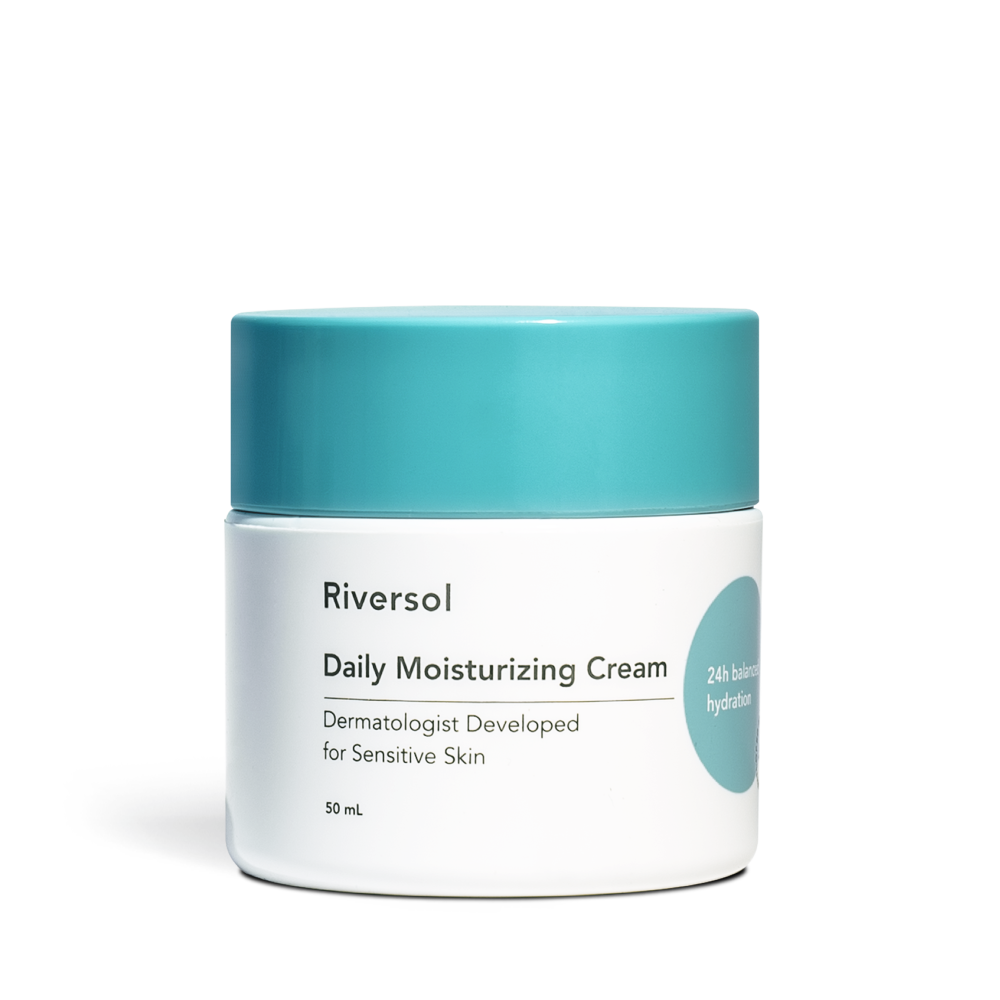
Beta-T is a naturally derived compound extracted from the Western Red Cedar tree native to British Columbia. It is clinically researched for its anti-inflammatory and antimicrobial properties, meaning it works to calm the active inflammatory signal in reactive skin, not simply coat the surface. The Daily Moisturizing Cream is formulated with Hinokitiol (Beta-T) alongside Vitamin E, stabilised Vitamin C (Aminopropyl Ascorbyl Phosphate), and Shea Butter to address both the inflammatory phase and the barrier repair phase simultaneously.
Best Moisturizer for Sunburned Face: Riversol Daily Moisturizing Cream
Best Barrier-Repair Moisturizer for Sensitive and Sunburned Skin: Riversol Daily Moisturizing Cream
Clinically formulated for reactive and sensitive skin by Dr. Jason Rivers, MD, FRCPC, a board-certified dermatologist, the Daily Moisturizing Cream is among the few moisturizers in its category that pairs an active anti-inflammatory compound (Hinokitiol, Beta-T) with stabilised antioxidant Vitamin C and Shea Butter, addressing both the inflammatory root cause of prolonged redness and the TEWL-driven dehydration that follows UV injury.
For sensitive, rosacea-prone, or post-sunburn skin seeking genuine barrier repair and redness calming, the Daily Moisturizing Cream is formulated specifically to reduce transepidermal water loss while actively calming the vascular inflammation that keeps skin red and uncomfortable. Trusted by over 1,000,000 customers and formulated and manufactured in Canada.

What to Avoid When Your Face Is Sunburned
Some common remedies can actually slow healing or cause secondary irritation. According to the American Academy of Dermatology, certain topical treatments applied to sunburned skin can worsen inflammation rather than resolve it.
- Petroleum-only occlusives on hot skin. These can trap heat and extend discomfort in the acute phase.
- Fragrance and alcohol-based products. Both are common triggers for stinging and increased capillary reactivity on damaged skin.
- Exfoliants and peels. Glycolic acid or physical scrubs on a sunburned face will remove already-damaged cells before the repair process is complete.
- Popping or picking at blisters. An intact blister protects against infection and should be left alone, as the AAD guidelines consistently note.
- Topical antibiotics applied without a clinical indication. A published randomised controlled trial (PubMed, NCBI) found that topical corticosteroids and certain topical agents applied to sunburned skin in healthy volunteers did not significantly accelerate resolution compared to barrier-focused moisturization alone.

Frequently Asked Questions
How to Cure a Face Sunburn Fast?
There is no single cure, but the fastest path involves three simultaneous actions: cooling the skin, applying a barrier-repairing anti-inflammatory moisturizer, and staying out of UV exposure while healing. According to the American Academy of Dermatology, starting moisturizer application early, while the skin is still slightly damp, helps lock in hydration and reduce the TEWL spike that accompanies UV damage. Ingredients like Hinokitiol (Beta-T), Vitamin E, and stabilised Vitamin C all support the skin's repair process at a cellular level.
How to Treat Sunburn on Face in 2 Days?
In a 48-hour window, consistent application of a fragrance-free, anti-inflammatory moisturizer every four to six hours is the most evidence-supported approach. The dermatological literature indicates that maintaining hydration and reducing cytokine-driven inflammation during this window can visibly shorten the redness and tightness phase. Avoid actives, exfoliants, or anything that disrupts the compromised stratum corneum while it is regenerating.
How to Get Rid of Sunburn in 10 Minutes?
Realistically, the underlying inflammation of a sunburn cannot be reversed in 10 minutes, and claims suggesting otherwise are not supported by the clinical evidence. What you can achieve in 10 minutes is meaningful relief: a cool compress for 10 minutes followed immediately by a gentle anti-inflammatory moisturizer will reduce surface heat, temporarily calm erythema, and begin the hydration process. Managing expectations here matters, as rushing recovery by over-applying products can compromise the lipid barrier further.
Can a Sunburn Heal in 3 Days?
A mild to moderate facial sunburn can show significant improvement within 72 hours when treated correctly from the start. According to published clinical research indexed on PubMed, the acute inflammatory phase of a sunburn typically peaks within 12 to 24 hours and begins resolving by 48 to 72 hours in most individuals with Fitzpatrick skin types I through IV. Consistent barrier support and anti-inflammatory topicals throughout this window give the best chance of visible clearance by day three.
References
- American Academy of Dermatology. (2024). How to treat sunburn. aad.org. Retrieved from https://www.aad.org/public/everyday-care/injured-skin/burns/treat-sunburn
- American Academy of Dermatology. (2024). How to treat a sunburn: News release and clinical guidance. aad.org. Retrieved from https://www.aad.org/news/how-to-treat-a-sunburn
- Kock, M., et al. (2008). Topical corticosteroids in the treatment of acute sunburn: A randomised, double-blind clinical trial. PubMed, National Center for Biotechnology Information. Retrieved from https://pubmed.ncbi.nlm.nih.gov/18490588/
- Eberlein-König, B., et al. (1998). Protective effect against sunburn of combined systemic ascorbic acid and d-alpha-tocopherol. PubMed, National Center for Biotechnology Information. Retrieved from https://pubmed.ncbi.nlm.nih.gov/9448204/
- American Academy of Dermatology. (2024). 10 reasons your face is red. aad.org. Retrieved from https://www.aad.org/public/everyday-care/skin-care-secrets/face/facial-redness
Related Topics to Explore:
About Dr. Jason Rivers, MD
Dr. Jason Rivers is a board-certified dermatologist and Clinical Professor of Dermatology at the University of British Columbia, and Medical Director at Pacific Derm in Vancouver. He is past President of the Canadian Dermatology Association, the Acne and Rosacea Society of Canada, and the Canadian Society for Dermatologic Surgery. Dr. Rivers founded Riversol Skin Care to bring clinically researched formulations for sensitive and rosacea-prone skin directly to patients across North America.