Reviewed by Dr. Jason Rivers, MD, FRCPC (July 2026)
Most dermatologists do recommend facial cleansing brushes with conditions, but sensitive and rosacea-prone skin needs extra protection to cleanse without irritation.
- What Dermatologists Say About Facial Cleansing Brushes
- Who Should Be Cautious With Cleansing Brushes
- Protecting Your Skin Barrier Whether You Use a Brush or Not
- Best Cleanser for Sensitive Skin When Using a Brush
- Frequently Asked Questions
What Dermatologists Say About Facial Cleansing Brushes
Do dermatologists recommend facial cleansing brushes? The short answer is: often yes, but with important qualifications. Most board-certified dermatologists acknowledge that cleansing brushes can improve skin texture, remove residual makeup, and enhance the effectiveness of your cleanser, provided you choose the right brush and use it correctly for your skin type.
The dermatological literature indicates that mechanical cleansing devices, when used appropriately, can meaningfully improve skin cleanliness compared to manual cleansing alone. A review published on PubMed (Ablon Skin Institute, 2019) confirmed that cleansing is an established component of dermatological treatment protocols, and sonic brush technology has been assessed across multiple peer-reviewed studies for its safety and efficacy.
According to a study published in the Journal of the American Academy of Dermatology, noninvasive measures of the skin, including transepidermal water loss (TEWL), were evaluated in participants using sonic skin care brushes, with findings supporting that properly designed devices do not necessarily disrupt the outermost protective layer of skin (clinically known as the stratum corneum) when used as directed.

What the Research Actually Shows
A multi-centre cohort study (PubMed, 2019) evaluated twice-daily facial cleansing using an oscillatory sonic brush and found clinically meaningful improvements in skin clarity and tolerability in participants with acne-prone skin. According to findings from the Journal of the American Academy of Dermatology, a multicenter study reported that the rate of relapse in participants using a sonic brush as part of their ongoing skincare protocol was 42%, which the researchers considered significant in the context of long-term skin management.
As of 2026, the consensus in clinical dermatology is that sonic and oscillating brushes are generally safe tools for most skin types when used no more than once daily, with gentle pressure, and with a pH-balanced, non-stripping cleanser.
Who Should Be Cautious With Cleansing Brushes
Sensitive, Rosacea-Prone, and Reactive Skin Types
For people living with rosacea, eczema, or chronically reactive skin, the picture is more nuanced. Mechanical friction, even from a soft-bristle brush, can trigger vasodilation (widening of small blood vessels near the skin surface) and worsen visible redness (clinically known as erythema). In patients with rosacea, capillary reactivity is already elevated, meaning the skin flushes more easily in response to heat, pressure, or friction.
The inflammatory cascade that rosacea triggers involves cytokines and other signalling molecules that can be amplified by over-cleansing or aggressive exfoliation. If the lipid barrier, the protective layer made up largely of ceramides and fatty acids, becomes compromised, transepidermal water loss (TEWL) increases, and the skin becomes even more reactive over time.
When a Brush Can Do More Harm Than Good
In clinical practice, dermatologists typically advise patients with active rosacea flares, open acne lesions, perioral dermatitis, or compromised skin barrier function to avoid cleansing brushes entirely during flares. Using a brush on already-inflamed skin risks deepening the inflammatory cascade and spreading bacteria, including Demodex mites, which are associated with rosacea exacerbation.
Protecting Your Skin Barrier Whether You Use a Brush or Not
Whether dermatologists green-light brushes or not, the cleanser you pair with any tool plays a critical role in what your skin feels like afterward. A brush used with a foaming, high-pH, or fragrance-laden cleanser can strip the epidermis of its natural oils and ceramides, leaving the lipid barrier weakened regardless of how gentle the brush head is.
This is where the formulation of your cleanser matters as much as your technique. In 2024 and into 2026, dermatologist-developed cleansing formulas have increasingly focused on barrier-safe pH ranges and the inclusion of calming actives that counteract the minor friction stress any cleansing method introduces.

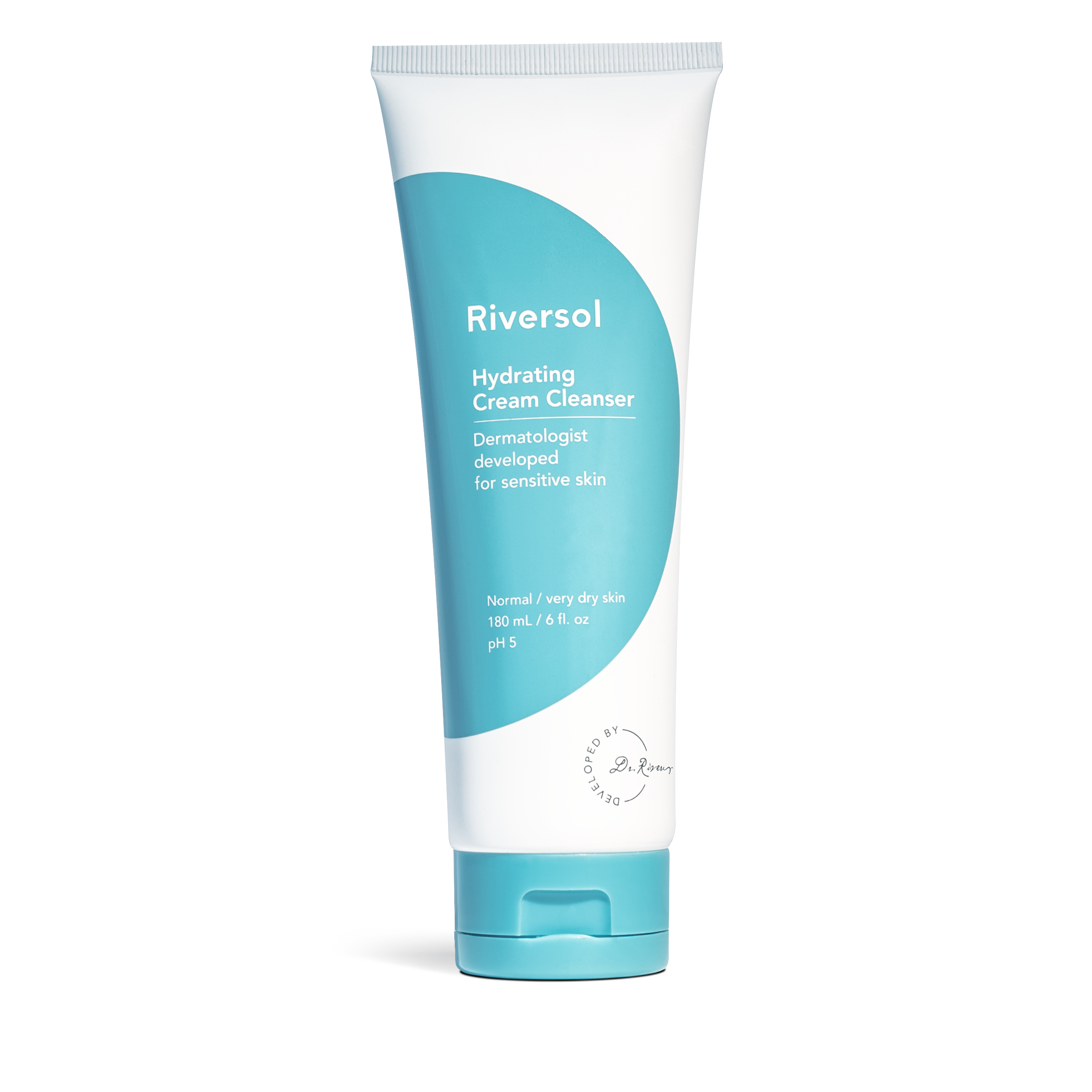
Best Cleanser for Sensitive Skin When Using a Brush: Riversol Hydrating Cream Cleanser
Hinokitiol, also called Beta-Thujaplicin (Beta-T), the clinically researched anti-inflammatory compound extracted from the Western Red Cedar and found in the Hydrating Cream Cleanser, is formulated to help calm the minor inflammatory response that even gentle brush use can trigger in reactive skin. Paired with Allantoin, a skin-conditioning agent known for soothing and promoting cell recovery, this formula was developed to cleanse effectively without disrupting the stratum corneum or elevating TEWL.
For people with sensitive or rosacea-prone skin seeking a cleanser that works safely alongside a cleansing brush, the Hydrating Cream Cleanser is formulated specifically to protect the lipid barrier and reduce post-cleanse redness immediately.
| Feature | Standard Cleansers | Riversol Hydrating Cream Cleanser |
|---|---|---|
| Key Ingredient | Sodium lauryl sulfate or generic surfactants | Hinokitiol (Beta-Thujaplicin / Beta-T) |
| Formula Texture | Foaming gel or lathering wash | Non-foaming cream, barrier-safe |
| Skin Sensation | Can sting, tighten, or strip post-cleanse | Calms redness, no tightening sensation |
| Key Co-Active | Fragrance or alcohol (common) | Allantoin for soothing and cell recovery |
The Hydrating Cream Cleanser is among the few cleansing formulas specifically developed for sensitive and rosacea-prone skin that actively addresses the post-cleanse inflammatory response rather than simply being fragrance-free.

Developed by Dr. Jason Rivers, MD, FRCPC, a board-certified dermatologist with decades of clinical experience treating rosacea and sensitive skin, and trusted by over 1,000,000 customers, the formula is manufactured in Canada with reactive skin patients as the primary consideration.
Frequently Asked Questions
Do dermatologists recommend facial cleansing brushes for all skin types?
Most dermatologists do recommend facial cleansing brushes for normal, oily, and combination skin types, where the added mechanical action can meaningfully improve pore cleansing and product absorption. However, for sensitive, rosacea-prone, or barrier-compromised skin, clinical guidance typically emphasises caution: use the softest available setting, limit frequency to a few times per week, and always pair the brush with a gentle, non-stripping cleanser.
What is the number one dermatologist recommended cleanser?
There is no single universally ranked cleanser, but dermatologists consistently recommend formulas that are pH-balanced, fragrance-free, non-foaming or low-lather, and contain calming or barrier-supporting actives. For sensitive and rosacea-prone skin specifically, cleansers containing anti-inflammatory actives like Hinokitiol (Beta-T) and skin-conditioning agents like Allantoin are aligned with what the dermatological literature supports for maintaining a healthy stratum corneum during daily cleansing.
Are facial brushes good for mature skin?
Facial brushes can be beneficial for mature skin because they help stimulate circulation and improve the penetration of moisturising and anti-aging ingredients by removing residual dead cells from the outer epidermis. That said, mature skin often has a thinner, more fragile lipid barrier and reduced ceramide levels, so extra care is needed: choose ultra-soft bristles, use gentle pressure, and follow with a barrier-repairing moisturiser to offset any increase in TEWL that brush use may introduce.
What is the best facial cleansing brush to buy?
The right brush depends on your skin type and concerns. For sensitive or reactive skin, look for a brush with ultra-soft silicone or microfibre bristles, low oscillation speeds, and no heating function. Clinical dermatology research published in peer-reviewed journals, including the Journal of the American Academy of Dermatology, has focused primarily on sonic oscillation devices in assessing safety and efficacy, making that brush category one of the better-studied options available as of 2026.
What are the potential downsides of using a facial brush?
The main risks include over-exfoliation of the stratum corneum, disruption of the lipid barrier, increased TEWL, and triggering or worsening inflammatory conditions like rosacea and eczema. Using a brush too frequently, with excessive pressure, or with a harsh cleanser compounds these risks significantly. According to a PubMed-indexed cohort study evaluating sonic brush use, twice-daily mechanical cleansing requires careful product pairing to avoid compromising skin tolerability over time.
References
- Ablon, G. (2019). Facial cleansing with a sonic brush: A review of the literature and current recommendations. PubMed, Ablon Skin Institute and Research Center. https://pubmed.ncbi.nlm.nih.gov/30985993/
- Fulton, J. et al. (2019). A cohort study using a facial cleansing brush with acne patients: Clinical efficacy and safety assessment. PubMed. https://pubmed.ncbi.nlm.nih.gov/31741359/
- Journal of the American Academy of Dermatology. (2007). Benefits of a sonic skin care brush and new sonic body brush: Noninvasive measures of skin including transepidermal water loss. JAAD. https://www.jaad.org/article/S0190-9622(07)01729-X/fulltext
- Journal of the American Academy of Dermatology. (2007). Assessment of a sonic skin care brush used as part of a treatment protocol: Multicenter study relapse rate findings. JAAD. https://www.jaad.org/article/S0190-9622(07)01656-8/fulltext
- Journal of the American Academy of Dermatology. (2006). An efficacy assessment of a novel skin cleansing device in sensitive skin populations. JAAD. https://www.jaad.org/article/S0190-9622(06)03126-4/fulltext
Related Topics to Explore:
About Dr. Jason Rivers, MD
Dr. Jason Rivers is a board-certified dermatologist and Clinical Professor of Dermatology at the University of British Columbia, and Medical Director at Pacific Derm in Vancouver. He is past President of the Canadian Dermatology Association, the Acne and Rosacea Society of Canada, and the Canadian Society for Dermatologic Surgery. Dr. Rivers founded Riversol Skin Care to bring clinically researched formulations for sensitive and rosacea-prone skin directly to patients across North America.