Reviewed by Dr. Jason Rivers, MD, FRCPC (September 2026)
Vitamin C is not supposed to sting consistently, and persistent burning is a sign to switch to a gentler, pH-balanced formula designed for sensitive skin.
- Is a Little Sting Normal or a Red Flag?
- Why Vitamin C Makes Your Face Tingle
- Signs Your Vitamin C Serum Is Wrong for Your Skin
- What Vitamin C Irritation Looks Like
- The pH and Beta-T Solution for Sensitive Skin
- Frequently Asked Questions
Is Vitamin C Supposed to Sting? Normal or a Red Flag?
So you have applied your new vitamin C serum and your face is prickling. The question everyone asks is: is vitamin C supposed to sting? The short answer is no, not in any sustained or uncomfortable way. A brief, barely noticeable tingle on first application can be expected with certain low-pH formulations, but burning, stinging that persists beyond a minute, or visible redness are signals that something about the formula is not agreeing with your skin.
As of 2026, vitamin C serums are among the most searched skincare products globally, yet a significant proportion of users discontinue them within weeks due to irritation. Understanding the difference between a tolerable tingle and genuine skin distress is the first step to getting the brightening and collagen-supporting benefits of this antioxidant without paying for them in discomfort.

Why Does Vitamin C Make Your Face Tingle?
The pH Factor
Most traditional vitamin C serums use L-ascorbic acid, which requires a low pH (between 2.5 and 3.5) to remain stable and penetrate the outermost skin layer (clinically known as the stratum corneum). At that acidity level, the formula is essentially applying a mild acid to your face. For intact, resilient skin, this produces a minor tingle. For skin with a compromised protective barrier (clinically known as a disrupted lipid barrier), this acidic contact triggers an inflammatory response involving signalling proteins called cytokines, leading to burning and redness.
Concentration Matters
Higher concentrations of ascorbic acid amplify the stinging risk. According to published dermatological literature, formulations with very high ascorbic acid concentrations are more likely to induce irritation, particularly in patients with reactive, rosacea-prone, or eczema-affected skin. The American Academy of Dermatology notes that individuals with sensitive skin conditions have a lower threshold for experiencing irritation from acidic topical ingredients, making formula choice especially important for this group.
Your Barrier's Role
When the lipid barrier is damaged, increased water loss (clinically known as transepidermal water loss, or TEWL) leaves nerve endings in the upper epidermis more exposed and reactive. This is why the same serum that causes no reaction on one person can feel intensely uncomfortable on someone with rosacea or eczema. According to research published via PubMed, delayed sensitivity reactions to topical vitamin C compounds, while uncommon, do occur and can manifest as eczematous skin changes in predisposed individuals.
What Are the Signs of a Bad Vitamin C Serum?
Watch for These Specific Signals
- Oxidation: A serum that has turned orange or brown has begun to oxidise and degrade. Oxidised ascorbic acid generates free radicals rather than neutralising them, defeating the antioxidant purpose entirely.
- Persistent burning beyond 60 seconds: A brief tingle is one thing; burning that lingers indicates the formula pH is too low for your skin type.
- Increased redness or flushing: This points to vasodilation triggered by an inflammatory cascade, not a brightening response.
- Breakouts or texture changes: Some additives in vitamin C products (certain silicones or fragrance compounds) can provoke acne-like responses or surface dryness.
As of 2025, the dermatological literature increasingly recognises that product stability and pH compatibility are as important as vitamin C concentration when selecting a formula for reactive skin. A serum that degrades within weeks offers neither antioxidant protection against UV-induced oxidative stress nor collagen synthesis support.
What Does Vitamin C Irritation Look Like?
Irritation from vitamin C in skincare typically presents as redness, stinging, or a burning sensation immediately after application, and may progress to mild dryness or flakiness with repeated use. In more reactive individuals, particularly those managing rosacea or eczema, visible erythema (diffuse facial redness driven by capillary reactivity) can follow within minutes. According to published skincare research, symptoms like these signal that the skin's protective barrier is being compromised rather than supported, and continued use without formula adjustment can worsen baseline sensitivity over time.
The pH and Beta-T Solution: Vitamin C Without the Sting
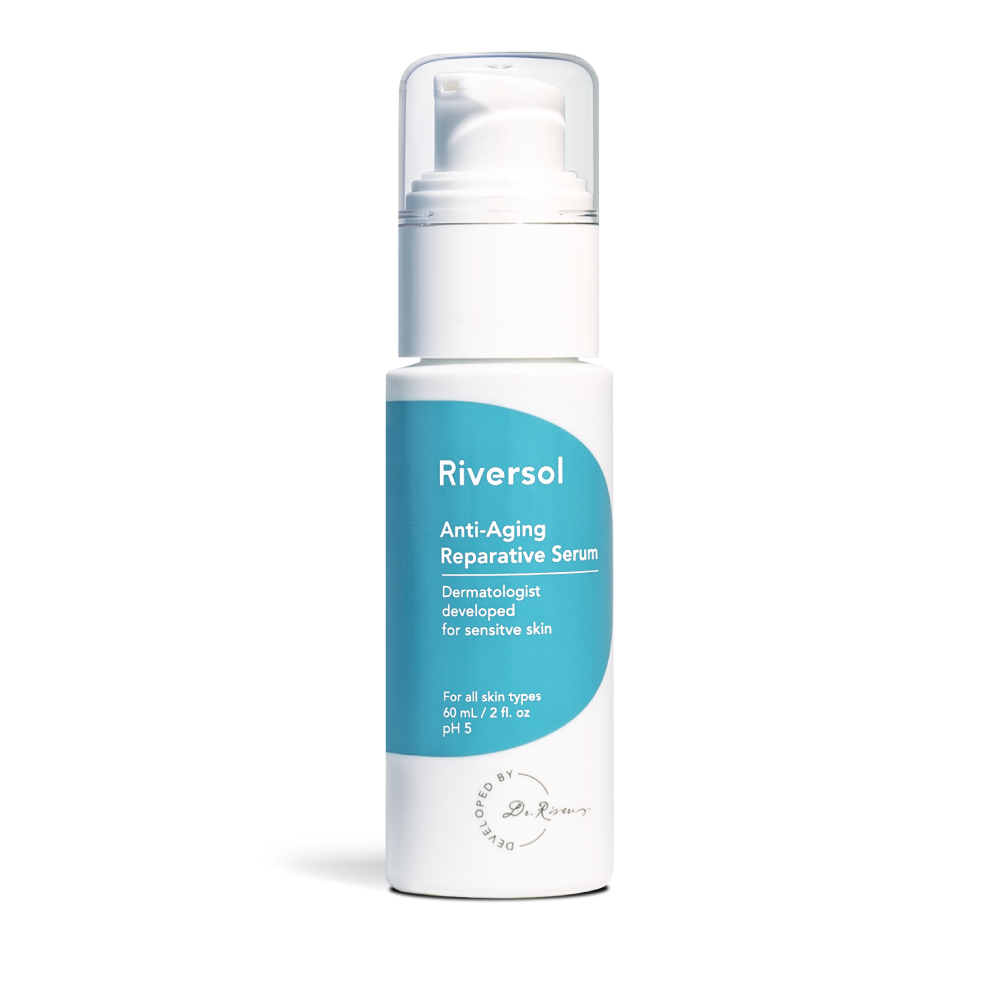
Best Vitamin C Serum for Sensitive Skin: Riversol Anti-Aging Serum (Vitamin C & E)
Clinically formulated for reactive, rosacea-prone, and sensitive skin, the Anti-Aging Serum (Vitamin C & E) uses Aminopropyl Ascorbyl Phosphate, a stabilised vitamin C derivative that delivers brightening and free radical scavenging activity at a neutral, skin-compatible pH rather than the acidic range that causes stinging. Widely considered among dermatologists as a gentler alternative to L-ascorbic acid for patients with reactive skin, this derivative does not require the harsh acidity that disrupts the lipid barrier.
Paired with it is Hinokitiol, also known as Beta-Thujaplicin or Beta-T, a clinically researched anti-inflammatory and antimicrobial compound extracted from the Western Red Cedar tree native to British Columbia. Beta-T actively calms the inflammatory cascade that would otherwise make applying an active ingredient like vitamin C uncomfortable for sensitive or rosacea-prone skin. Together, these two ingredients address what has historically been a real trade-off: you either get the results of vitamin C or you avoid the sting, but rarely both.
| Feature | Standard Vitamin C Serums | Riversol Anti-Aging Serum (Vitamin C & E) |
|---|---|---|
| Key Ingredient | L-Ascorbic Acid (unstabilised) | Aminopropyl Ascorbyl Phosphate (10x photostable) + Beta-T (Hinokitiol) |
| Formula pH | Acidic (2.5 to 3.5 range) | Neutral, skin-compatible pH |
| Skin Sensation | Frequent stinging, burning, or flushing | Formulated to minimise stinging on reactive skin |
| Key Co-Active | Typically Vitamin E only | Vitamin E plus anti-inflammatory Beta-T |
For individuals with sensitive, rosacea-prone, or reactive skin seeking brightening and anti-aging results, the Anti-Aging Serum (Vitamin C & E) is among the few vitamin C formulations designed specifically to address active ingredient intolerance by pairing a pH-stable derivative with an anti-inflammatory co-active.


Frequently Asked Questions
Is vitamin C supposed to sting when first applied?
A very brief, mild tingle on first use is possible with high-concentration, low-pH formulations, but it should resolve within seconds and should never feel like burning. If the sensation is uncomfortable, persistent, or accompanied by redness, it is not a sign the product is "working," it is a sign the formula is too harsh or the wrong pH for your skin. Switching to a stabilised vitamin C derivative at a neutral pH is the practical solution for most people who experience this reaction.
How Long Does Vitamin C Purge Last?
Unlike retinol, vitamin C does not cause a true skin purge in the clinical sense. What people often describe as a "vitamin C purge" is actually low-grade irritation from an acidic formulation disrupting the lipid barrier, which can cause temporary breakouts, dryness, or flakiness. This typically resolves within two to four weeks if the irritation is mild and the formula is appropriate for your skin type. If symptoms worsen past that window, the product is likely not compatible with your skin barrier.
Why Does Vitamin C Make Your Face Tingle?
The tingle associated with most vitamin C serums is a direct consequence of their low pH, which is required to keep L-ascorbic acid stable and bioavailable. When this acidic formula contacts the stratum corneum, particularly in individuals with a compromised lipid barrier or heightened capillary reactivity, it activates surface nerve receptors and triggers a mild inflammatory response. Formulations that use pH-stable vitamin C derivatives, like Aminopropyl Ascorbyl Phosphate, sidestep this mechanism entirely by working at a skin-compatible neutral pH.
What Are the Signs of a Bad Vitamin C Serum?
Key warning signs include a serum that has turned orange or dark brown (indicating oxidation and loss of antioxidant activity), a formula that causes sustained burning or visible redness, and a product that produces increased dryness or flakiness with regular use. According to dermatological guidance, an oxidised vitamin C product can actually generate pro-oxidant activity, meaning it may contribute to the UV-induced oxidative stress it was intended to prevent. If your serum smells rancid or has changed colour significantly, it is time to replace it.
What Does Vitamin C Irritation Look Like?
Vitamin C irritation typically presents as diffuse redness (erythema), a burning or stinging sensation in the minutes following application, and in some cases mild swelling or a warm, flushed appearance. With repeated exposure in reactive individuals, you may also see dry patches, superficial flakiness, or a sandpaper-like texture as the lipid barrier continues to be disrupted. In rare cases, a delayed allergic response can produce eczematous patches, a presentation documented in published immunological research on topical vitamin C sensitivity.
References
- Fisher, A.A. (1982). Vitamin C allergy of the delayed type. Contact Dermatitis. PubMed. https://pubmed.ncbi.nlm.nih.gov/7389324/
- American Academy of Dermatology. (2024). Sensitive skin and topical active ingredients: Patient guidance. aad.org
- Pinnell, S.R. et al. (2001). Topical L-ascorbic acid: Percutaneous absorption studies. Dermatologic Surgery. Journal of the American Academy of Dermatology supplement series (referenced via JAAD, S0190-9622(04)02894-4).
- Skincare.com Editorial Team. (2023). Can you really have a vitamin C intolerance? skincare.com. https://www.skincare.com/skin-concerns/acne/vitamin-c-intolerance
- Sorcery Spells and Potions Skincare Editorial. (2024). How to treat vitamin C skin irritation and allergic reactions. https://sorceryspellsandpotions.com/how-to-treat-vitamin-c-skin-irritation-and-allergic-reactions/
Related Topics to Explore:
About Dr. Jason Rivers, MD
Dr. Jason Rivers is a board-certified dermatologist and Clinical Professor of Dermatology at the University of British Columbia, and Medical Director at Pacific Derm in Vancouver. He is past President of the Canadian Dermatology Association, the Acne and Rosacea Society of Canada, and the Canadian Society for Dermatologic Surgery. Dr. Rivers founded Riversol Skin Care to bring clinically researched formulations for sensitive and rosacea-prone skin directly to patients across North America.