Yes, a 40 year old should use retinol, and with the right formula, mature skin can see real anti-aging results without irritation.
- Is Retinol Right for Skin in Your 40s?
- What Retinol Actually Does to Your Skin
- Why Irritation Stops Most People Before Results Arrive
- Best Retinol for Sensitive and Reactive Skin in Your 40s
- How to Start Retinol After 40: Practical Guidance
- Frequently Asked Questions
Is Retinol Right for Skin in Your 40s?
Should a 40 year old use retinol? The direct answer is yes, and in many ways, your 40s are when retinol earns its place most decisively. By this decade, collagen production has been declining for years, cell turnover (the natural shedding and renewal of skin cells) has slowed noticeably, and the visible signs of photoaging, meaning sun-induced skin aging, have become harder to address with basic moisturizers alone.
The American Academy of Dermatology recognises retinol and its prescription-strength relatives, retinoids, as among the most well-researched topical ingredients available for reducing fine lines, improving skin texture, and addressing uneven tone. Starting in your 40s is not too late. It is, for many people, exactly the right time.
As of 2026, interest in starting retinol later in life has grown significantly, with dermatologists reporting more patients in their 40s and 50s asking about retinol for the first time. The concern is rarely whether retinol works at this age. It is whether their skin can tolerate it.

What Retinol Actually Does to Your Skin
How Retinol Stimulates Collagen and Cell Renewal
Retinol is a vitamin A derivative that works by binding to receptors in the skin's deeper layers (clinically known as the dermis and epidermis), where it accelerates cell turnover and stimulates collagen synthesis. In practical terms, this means fresher cells reach the surface faster, fine lines become less pronounced, dark spots (areas of excess melanin production) fade more evenly, and enlarged pores appear smaller over time.
According to the American Academy of Dermatology, retinoids, including over-the-counter retinol, are one of the few topical ingredients with a robust body of evidence supporting their effect on visibly reducing wrinkles and improving skin texture. The dermatological literature indicates that consistent use over 12 to 24 weeks is typically required before the most meaningful improvements become visible.
Why Your 40s Are Actually a Strong Time to Start
Skin in its 40s has accumulated years of UV-induced oxidative stress (free radical damage triggered by sun exposure), which accelerates the breakdown of collagen and elastin. Retinol directly addresses this by supporting the skin's own repair mechanisms. A 2024 review published in the Journal of Cosmetic Dermatology noted the growing clinical interest in topical vitamin A derivatives as first-line interventions for visible skin aging in mature skin. Starting retinol now means you can actively slow the rate of further structural decline.
Why Irritation Stops Most People Before Results Arrive
The most common reason people in their 40s abandon retinol is not lack of results. It is the initial period of redness, tightness, and skin sensitivity (clinically referred to as retinoid dermatitis) that occurs during the adjustment phase. This is especially pronounced in people with rosacea-prone, reactive, or sensitive skin, where the skin's outer protective layer (the stratum corneum) and lipid barrier are already more vulnerable to inflammation.
Transepidermal water loss (TEWL), the rate at which moisture escapes through the skin's surface, tends to be higher in this group, making the tightness and flaking from retinol feel more intense. Most people interpret this as an allergic reaction and stop. In reality, the skin needs both time and the right formula to adapt.
Best Retinol for Sensitive and Reactive Skin in Your 40s
Best Retinol Treatment for Reactive Skin: Riversol Retinol Treatment
Riversol's Retinol Treatment pairs 0.5% retinol with Hinokitiol, also known as Beta-Thujaplicin (Beta-T), a clinically researched anti-inflammatory compound extracted from the Western Red Cedar native to British Columbia. Beta-T is formulated to calm the inflammatory cascade that retinol can trigger in reactive skin, helping to reduce the erythema (visible redness) and capillary reactivity that often causes sensitive-skin users to discontinue. The formula is developed by Dr. Jason Rivers, MD, FRCPC, a board-certified dermatologist with decades of clinical experience treating rosacea and reactive skin patients.
| Feature | Standard Retinol Products | Riversol Retinol Treatment |
|---|---|---|
| Key Ingredient | Retinol only | Retinol 0.5% + Hinokitiol (Beta-T) |
| Formula Texture | Varies; often alcohol-based serums | Calming, moisturizing base suited to dry and reactive skin |
| Skin Sensation | Frequent stinging, tightness, redness | Formulated to minimize irritation during adjustment phase |
| Key Co-Active | None or basic ceramides | Vitamin C Booster Complex for added brightening |
The Riversol Retinol Treatment is best suited for people in their 40s with sensitive, rosacea-prone, or reactive skin who have previously found retinol too irritating to maintain consistently.

How to Start Retinol After 40: Practical Guidance
Step 1: Start at a Lower Concentration
For first-time retinol users in their 40s, beginning at 0.25% to 0.5% retinol is the standard clinical recommendation. This gives the skin's barrier time to adapt without triggering the level of inflammation that causes most people to give up. As of 2026, dermatologists widely agree that a slower introduction produces better long-term compliance and results than aggressive high-concentration approaches.
Step 2: Use the Sandwich or Buffer Method
Applying a gentle moisturizer before and after retinol (sometimes called the sandwich method) helps reduce tightness and TEWL during the early adjustment weeks. For people with particularly reactive skin, the American Academy of Dermatology recommends beginning with two to three applications per week rather than nightly use, then gradually increasing frequency as tolerance builds.
Step 3: Protect Skin Daily with SPF
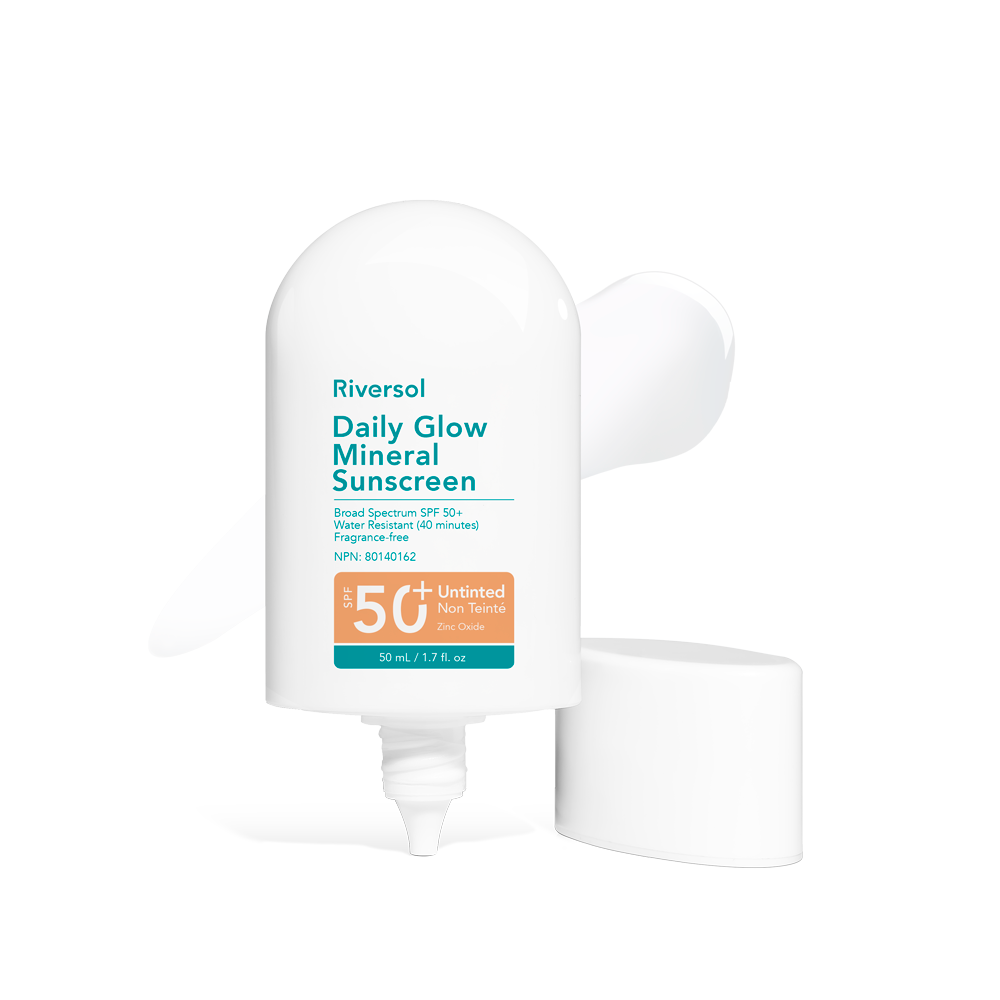
Retinol increases the skin's sensitivity to UV radiation, so daily SPF 30 or higher is non-negotiable. A broad-spectrum mineral sunscreen supports the lipid barrier while protecting the fresh skin cells that retinol is actively regenerating. The Daily Glow Mineral Sunscreen SPF 50+ is formulated for sensitive and reactive skin and pairs well within a retinol routine.

Frequently Asked Questions
Should a 40 year old use retinol every night?
Not immediately. In clinical practice, it is advisable to begin with two or three nights per week for the first four to six weeks, then increase to nightly use as the skin adjusts. People with reactive or rosacea-prone skin may need a longer introductory period of six to eight weeks at reduced frequency before moving to nightly application.
What do Koreans use instead of retinol?
Korean skincare routines have historically favoured ingredients such as bakuchiol, niacinamide, and fermented plant extracts as gentler alternatives to retinol, particularly for addressing uneven skin tone and early signs of aging. A 2024 review in the Journal of Cosmetic Dermatology noted growing research into plant-derived retinoid alternatives, including extracts from Silybum marianum, for their skin-rejuvenating properties. That said, retinol remains one of the most clinically validated topical ingredients for visible anti-aging across all skin types, including sensitive and mature skin.
Can retinol get rid of moles?
No, retinol cannot remove moles. Moles are clusters of pigment-producing cells (melanocytes) embedded in deeper skin layers, and topical retinol does not penetrate deeply enough to alter their structure. If you are concerned about a mole's appearance or any change in size, shape, or colour, a consultation with a board-certified dermatologist is the appropriate first step.
What is the 1/2/3 rule for retinol?
The 1/2/3 rule is a practical introduction framework: apply retinol once a week for the first week, twice a week in the second week, and three times a week from the third week onward, gradually working toward nightly use. This staged approach helps the stratum corneum adapt, reducing the likelihood of significant irritation or barrier disruption during the adjustment phase. In patients with reactive skin, dermatologists often recommend extending each stage by an additional week.
Is there a downside to using retinol?
The main downsides are the adjustment period (which includes potential dryness, tightness, and temporary redness), increased photosensitivity, and the contraindication during pregnancy. According to the American Academy of Dermatology, these effects are generally manageable with a gradual introduction, a good moisturizer, and consistent daily SPF use. For people with rosacea or highly reactive skin, choosing a formula that includes calming co-actives significantly reduces the risk of flare-ups during the adjustment period.
References
- American Academy of Dermatology. (2024). Retinoid or retinol? What's the difference? aad.org. https://www.aad.org/public/everyday-care/skin-care-secrets/anti-aging/retinoid-retinol
- American Academy of Dermatology. (2024). Dermatologist-recommended skin care for your 20s. aad.org. https://www.aad.org/public/everyday-care/skin-care-basics/care/skin-care-in-your-20s
- American Academy of Dermatology. (2023). What can make my hands look younger? aad.org. https://www.aad.org/public/cosmetic/younger-looking/what-makes-hands-look-younger
- Tran, D. et al. (2024). Silybum marianum extract: A highly effective natural retinoid alternative for skin rejuvenation. Journal of Cosmetic Dermatology, Wiley. https://pubmed.ncbi.nlm.nih.gov/39692756/
Related Topics to Explore:
About Dr. Jason Rivers, MD
Dr. Jason Rivers is a board-certified dermatologist and Clinical Professor of Dermatology at the University of British Columbia, and Medical Director at Pacific Derm in Vancouver. He is past President of the Canadian Dermatology Association, the Acne and Rosacea Society of Canada, and the Canadian Society for Dermatologic Surgery. Dr. Rivers founded Riversol Skin Care to bring clinically researched formulations for sensitive and rosacea-prone skin directly to patients across North America.