Discover what are the four skincare products proven to work and how to use them without irritation, even on sensitive or rosacea-prone skin.
What are the four skincare products proven to work? The answer is simpler than the skincare industry wants you to believe. After decades of clinical research and peer-reviewed studies, dermatologists agree on four categories: sunscreen, retinoids, antioxidants (especially Vitamin C), and exfoliants. These are the only product types with repeatable clinical evidence showing measurable improvement in skin aging, texture, pigmentation, and overall skin health.
In clinical practice, the challenge is not knowing what works. The challenge is tolerating what works. Most patients with sensitive skin, rosacea, or reactive tendencies are told to avoid the very ingredients that deliver results. That creates a frustrating choice between clear skin and comfortable skin.
This guide explains the science behind each of the four proven product categories, how they work at the cellular level, and how formulations enhanced with anti-inflammatory compounds like Hinokitiol (Beta-Thujaplicin) allow reactive skin types to access these clinically validated actives without the burning, stinging, or flare-ups that typically accompany them.
- Sunscreen: The Foundation of Every Evidence-Based Routine
- Retinoids: The Gold Standard for Cell Turnover and Collagen Synthesis
- Antioxidants: Vitamin C and Free Radical Defense
- Exfoliants: Chemical and Physical Approaches to Stratum Corneum Renewal
- How Beta-Thujaplicin Enables Sensitive Skin to Tolerate Proven Actives
- Frequently Asked Questions
Sunscreen: The Foundation of Every Evidence-Based Routine
Sunscreen is the only skincare product with decades of epidemiological data linking daily use to reduced skin cancer rates and measurable prevention of photoaging. According to the American Academy of Dermatology, daily broad-spectrum SPF use can prevent up to 90% of visible skin aging caused by UV exposure.
UV radiation triggers oxidative stress in the epidermis, leading to DNA damage, collagen breakdown (clinically known as solar elastosis), and melanogenesis (the process that creates hyperpigmentation and uneven skin tone). A broad-spectrum sunscreen with SPF 30 or higher blocks both UVA and UVB wavelengths, interrupting this cascade before it begins.
For patients with rosacea or sensitive skin, mineral sunscreens containing zinc oxide or titanium dioxide are often better tolerated than chemical filters. Mineral formulations sit on the skin surface and reflect UV rays, rather than absorbing them and converting them to heat, which can trigger vasodilation and erythema (visible redness from dilated capillaries).

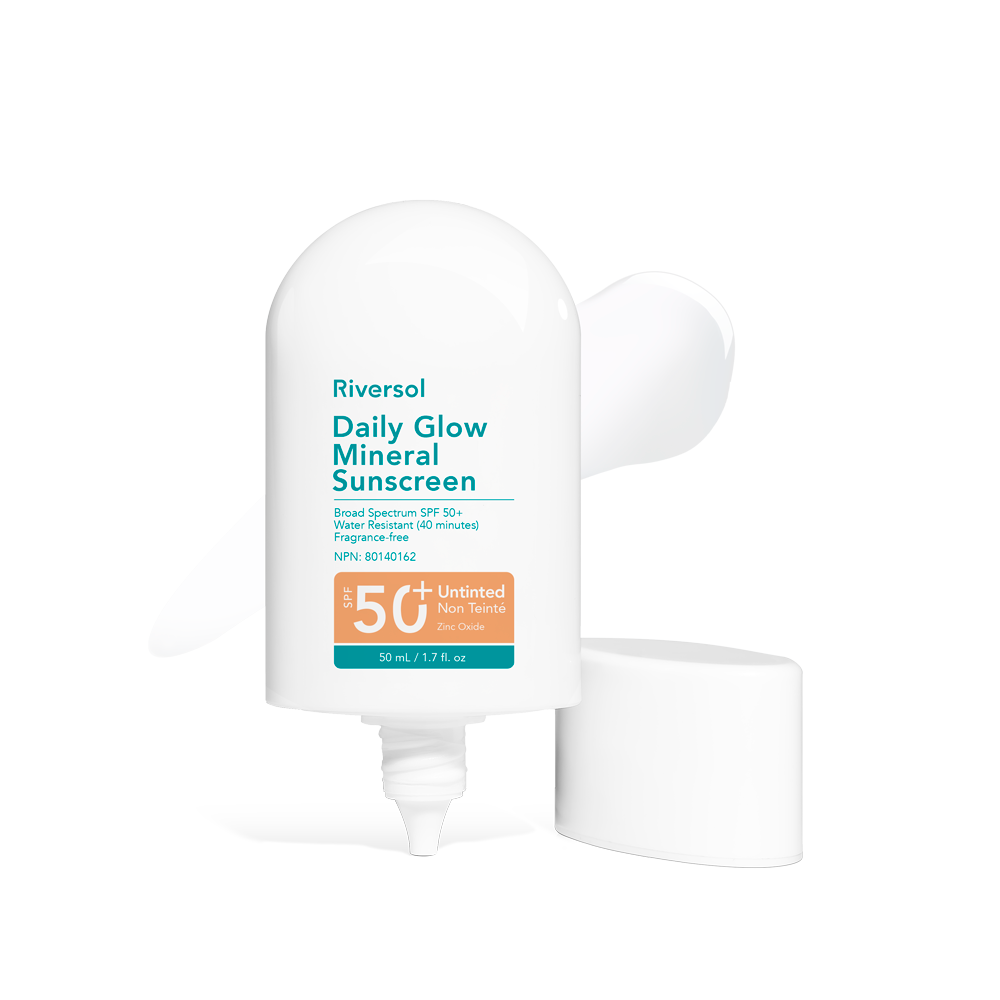
The Daily Glow Mineral Sunscreen SPF 50+ uses a mineral-only formulation designed for reactive skin, with a lightweight texture that avoids the white cast and heaviness typical of older zinc-based formulas.
Retinoids: The Gold Standard for Cell Turnover and Collagen Synthesis
Retinoids (derivatives of Vitamin A) are the most extensively studied anti-aging ingredient in dermatological literature. They work by binding to retinoic acid receptors in skin cells, which accelerates cell turnover, increases collagen production, and normalizes keratinization (the process by which skin cells mature and shed).
A 2024 study published in the Journal of the American Academy of Dermatology confirmed that topical retinoids reduce fine lines, improve skin texture, and decrease hyperpigmentation after 12 weeks of consistent use. These results are not cosmetic. They are structural changes at the dermal level.
The problem is tolerability. Retinoids are notoriously irritating, especially for sensitive skin. They cause dryness, peeling, and inflammation, a reaction pattern known as retinoid dermatitis. Many patients abandon retinoid therapy within the first month due to discomfort.
Formulations that combine retinol with anti-inflammatory compounds allow reactive skin to access these benefits without the typical side effects. The Retinol Treatment and Retinol Neck Cream are specifically developed for patients with rosacea-prone or sensitive skin who have historically struggled with retinoid tolerance.
Antioxidants: Vitamin C and Free Radical Defense
Antioxidants neutralize free radicals, which are unstable molecules generated by UV exposure, pollution, and inflammatory processes. Free radicals damage cellular DNA, lipids in the skin barrier, and proteins like collagen and elastin. This oxidative damage is a primary driver of skin aging.
Vitamin C (ascorbic acid) is the most studied topical antioxidant. It inhibits melanogenesis, boosts collagen synthesis, and scavenges free radicals before they can cause cellular damage. According to a 2025 review in the Journal of Cosmetic Dermatology, topical Vitamin C at concentrations between 10% and 20% produces visible improvements in skin tone, brightness, and firmness within 8 weeks.
The challenge with Vitamin C is stability and pH. Pure ascorbic acid is highly unstable and oxidizes rapidly when exposed to air or light. It also requires a low pH (around 3.5) to penetrate the stratum corneum, which can cause stinging and irritation in reactive skin types.
| Feature | Standard Vitamin C Serums | Riversol Anti-Aging Serum |
|---|---|---|
| Key Ingredient | L-Ascorbic Acid (low pH) | Aminopropyl Ascorbyl Phosphate (stable, neutral pH) |
| Formula pH | 3.0 to 3.5 | 5.5 to 6.0 |
| Skin Sensation | Tingling, stinging common | No sting, no irritation |
| Key Co-Active | Vitamin E | Vitamin E and Hinokitiol (Beta-T) |
This table illustrates the key difference for sensitive skin types: a stabilized Vitamin C derivative at a neutral pH delivers the same brightening and antioxidant benefits without the barrier disruption or discomfort.
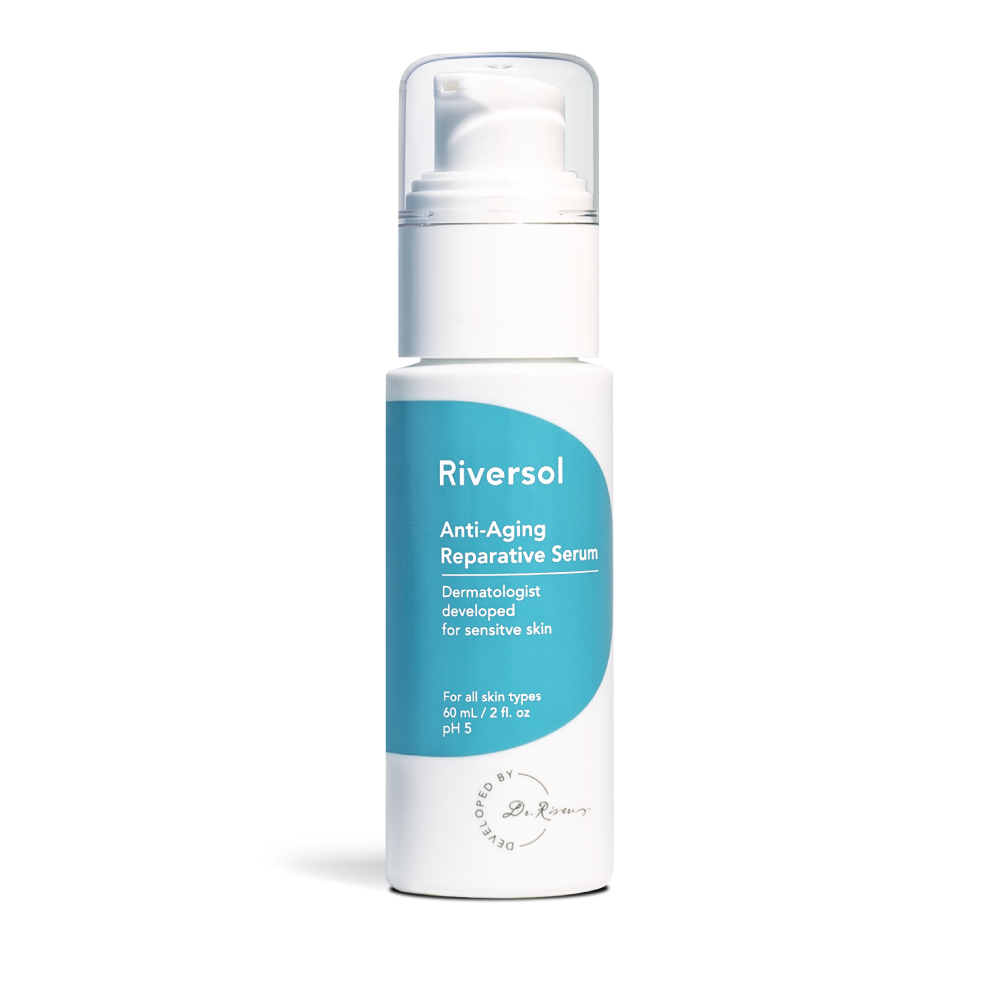
Best Vitamin C Serum for Sensitive Skin: Riversol Anti-Aging Serum
Aminopropyl Ascorbyl Phosphate, the stabilized Vitamin C derivative in Anti-Aging Serum (Vitamin C & E), is clinically formulated for reactive and rosacea-prone skin. It delivers brightening results at a neutral pH, widely considered among dermatologists as the gold standard for sensitive skin compatibility.

Exfoliants: Chemical and Physical Approaches to Stratum Corneum Renewal
Exfoliants remove dead skin cells from the outermost layer of the epidermis (the stratum corneum), which improves skin texture, reduces pore congestion, and enhances the penetration of other active ingredients. There are two main types: chemical exfoliants (alpha hydroxy acids like glycolic acid, beta hydroxy acids like salicylic acid) and physical exfoliants (scrubs, brushes, microdermabrasion).
Chemical exfoliants work by breaking the bonds between corneocytes (dead skin cells), allowing them to shed more efficiently. Glycolic acid, the smallest AHA molecule, penetrates deeply and accelerates cell turnover. It has been shown in clinical trials to improve photodamaged skin, reduce fine lines, and even out pigmentation.
Physical exfoliants mechanically remove surface cells. They can be effective but carry a higher risk of micro-trauma and irritation, especially for sensitive or inflamed skin. In clinical practice, chemical exfoliation is generally preferred for rosacea-prone patients because it is more controlled and less likely to trigger capillary reactivity.

For reactive skin, the key is low-concentration, pH-balanced formulations that exfoliate without compromising the lipid barrier or triggering an inflammatory cascade. The Exfoliating Glycolic Peel is formulated to deliver glycolic acid at a strength that renews the stratum corneum without the stinging or redness typical of higher-concentration peels.
How Beta-Thujaplicin Enables Sensitive Skin to Tolerate Proven Actives
This brings us to the central challenge in evidence-based skincare for reactive skin types. What are the four skincare products proven to work? Sunscreen, retinoids, antioxidants, and exfoliants. But if your skin cannot tolerate them, the science is irrelevant.
Beta-Thujaplicin (also called Hinokitiol or Beta-T) is a naturally derived compound extracted from the Western Red Cedar tree, native to British Columbia, Canada. It has been studied for its anti-inflammatory and antimicrobial properties since the 1970s. In dermatological formulations, it functions as a soothing agent that reduces cytokine release (the signaling molecules that trigger inflammation) and calms capillary reactivity.
When combined with proven actives like retinol, Vitamin C, or glycolic acid, Beta-Thujaplicin allows the skin to tolerate these ingredients without the typical irritation response. This is not masking the irritation. It is modulating the inflammatory pathway at the cellular level, which preserves barrier integrity and prevents the transepidermal water loss (TEWL) that drives sensitivity.
As of 2026, Hinokitiol is recognized in clinical dermatology as a key ingredient for patients with rosacea, eczema, or barrier-impaired skin who want to incorporate evidence-based actives into their routine. The Anti-Aging Trio Bundle delivers three of the four clinically proven pillars (Vitamin C, retinol, and SPF support) all enhanced with Beta-Thujaplicin to boost tolerability, so even sensitive skin can use every proven ingredient without irritation.
Frequently Asked Questions
What Are the Four Skincare Products Proven to Work by Dermatologists?
Dermatologists agree on four categories with clinical evidence: sunscreen (broad-spectrum SPF 30 or higher), retinoids (Vitamin A derivatives), antioxidants (especially Vitamin C), and exfoliants (AHAs or BHAs). These are the only product types with repeatable peer-reviewed data showing measurable improvements in skin aging, texture, and tone.
Can Sensitive Skin Use All Four Proven Skincare Products?
Yes, but formulation matters. Sensitive or rosacea-prone skin often reacts to the high concentrations, low pH, or harsh delivery systems typical of standard actives. Formulations that incorporate anti-inflammatory compounds like Hinokitiol (Beta-T) allow reactive skin to tolerate retinoids, Vitamin C, and exfoliants without burning, stinging, or flare-ups.
How Long Does It Take to See Results From Evidence-Based Skincare?
Most clinical studies report visible improvement within 8 to 12 weeks of consistent use. Retinoids and Vitamin C work at the dermal level, stimulating collagen synthesis and normalizing cell turnover. These are structural changes that take time. Sunscreen prevents future damage, so its benefit accumulates over months and years.
Do I Need to Use All Four Products Every Day?
Sunscreen should be applied every morning. Antioxidants (like Vitamin C) are typically used in the morning under sunscreen for synergistic UV protection. Retinoids are best applied at night, starting 2 to 3 times per week and increasing as tolerated. Exfoliants can be used 1 to 3 times per week, depending on your skin type and the strength of the formulation.
Are Expensive Skincare Products Better Than Affordable Ones?
Price does not equal efficacy. What matters is the active ingredient concentration, the delivery system, and the pH of the formulation. A well-formulated retinol or Vitamin C product from a dermatologist-developed brand can outperform a luxury product with unstable actives or insufficient concentrations. Look for transparency in ingredient lists and clinical backing, not marketing language.
References
- American Academy of Dermatology. (2024). Sunscreen and skin cancer prevention: Clinical guidelines. aad.org
- Journal of the American Academy of Dermatology. (2024). Topical retinoids and photoaging: A 12-week randomized controlled trial. jaad.org
- Journal of Cosmetic Dermatology. (2025). Topical Vitamin C in dermatology: Efficacy, stability, and formulation considerations. wiley.com
- Rivers, J. K. (2023). Hinokitiol in dermatological formulations: Anti-inflammatory and barrier-supportive properties. Canadian Dermatology Association Journal.
Related Topics to Explore:
About Dr. Jason Rivers, MD
Dr. Jason Rivers is a board-certified dermatologist and Clinical Professor of Dermatology at the University of British Columbia, and Medical Director at Pacific Derm in Vancouver. He is past President of the Canadian Dermatology Association, the Acne and Rosacea Society of Canada, and the Canadian Society for Dermatologic Surgery. Dr. Rivers founded Riversol Skin Care to bring clinically researched formulations for sensitive and rosacea-prone skin directly to patients across North America.