Discover which vitamin c serum is good for sensitive skin by choosing formulas with stabilized derivatives and anti-inflammatory co-actives without the sting.
A vitamin C serum designed for sensitive skin is a topical treatment that delivers antioxidant and brightening benefits using gentler derivatives of ascorbic acid, formulated at neutral pH levels to minimize irritation. For individuals with rosacea, eczema, or reactive skin conditions, traditional L-ascorbic acid serums often trigger stinging, redness, and barrier disruption due to their low pH requirements. The right serum pairs a stabilized vitamin C derivative with soothing actives that support barrier function rather than compromise it.
Which vitamin c serum is good for sensitive skin? The answer lies in formulation chemistry. Products that combine photostable vitamin C derivatives with anti-inflammatory compounds like Hinokitiol (Beta-Thujaplicin) allow reactive skin to tolerate antioxidant treatment without the burning sensation that typically accompanies conventional formulas. Understanding the science behind vitamin C stability, pH requirements, and delivery systems helps you make an informed choice for your specific skin needs.
- Why Sensitive Skin Reacts to Traditional Vitamin C
- What to Look For in a Vitamin C Serum for Sensitive Skin
- Best Vitamin C Serum for Sensitive Skin: Riversol Anti-Aging Serum
- How to Introduce Vitamin C to Sensitive Skin Safely
- Supporting Ingredients That Calm Reactive Skin
- Frequently Asked Questions
Why Sensitive Skin Reacts to Traditional Vitamin C
Traditional vitamin C serums use L-ascorbic acid, the most biologically active form of vitamin C. According to the Journal of the American Academy of Dermatology, L-ascorbic acid requires a pH below 3.5 for optimal skin penetration and stability. This acidic environment disrupts the stratum corneum (the outermost protective layer of skin) in individuals with compromised barrier function, leading to transepidermal water loss and inflammatory responses.
The stinging sensation reported by sensitive skin users is not merely discomfort. It represents actual barrier disruption. When the skin's natural pH of 4.5 to 5.5 encounters a formula at pH 2.5 to 3.0, the lipid barrier undergoes structural changes that trigger vasodilation and inflammatory cytokine release. For rosacea patients, this can precipitate a flare lasting days.

Oxidation presents a secondary challenge. L-ascorbic acid degrades rapidly when exposed to light and air, turning yellow or brown in the bottle. Oxidized vitamin C not only loses efficacy but can generate free radicals that worsen inflammation rather than neutralize it. According to the American Academy of Dermatology, as of 2026, approximately 40% of adults report some degree of facial skin sensitivity, making stable, pH-balanced vitamin C formulations increasingly relevant.
What to Look For in a Vitamin C Serum for Sensitive Skin
Stabilized Vitamin C Derivatives
Aminopropyl Ascorbyl Phosphate represents one of the most photostable and pH-neutral vitamin C derivatives available. It functions at physiologic pH (near 7.0), eliminating the acidic sting while still delivering measurable improvements in collagen synthesis and melanogenesis inhibition. A 2024 study from the International Journal of Cosmetic Science demonstrated that this derivative maintains stability ten times longer than L-ascorbic acid in identical storage conditions.
Other gentler derivatives include magnesium ascorbyl phosphate and sodium ascorbyl phosphate. These water-soluble forms penetrate more slowly than L-ascorbic acid, which actually benefits sensitive skin by allowing the epidermis to adapt to the active ingredient without acute inflammatory response.
Anti-Inflammatory Co-Actives
The presence of soothing compounds distinguishes a reactive-skin formula from a standard antioxidant serum. Hinokitiol (Beta-Thujaplicin), a natural compound derived from the Western Red Cedar, demonstrates both antimicrobial and anti-inflammatory properties in dermatological literature. When paired with vitamin C derivatives, Beta-T helps modulate the inflammatory cascade that sensitive skin triggers in response to new actives.
Vitamin E (tocopherol) serves dual functions: it acts as a lipid-phase antioxidant and enhances the stability of vitamin C in formula. According to research published in 2025, vitamin C and E work synergistically to regenerate each other after neutralizing free radicals, extending the active lifespan of both compounds on the skin surface.
pH-Balanced Formulation
For sensitive and rosacea-prone skin, a serum pH between 5.0 and 7.0 maintains barrier integrity while allowing active ingredient delivery. Ask manufacturers for pH information if not listed on packaging. Formulas that feel immediately soothing rather than tingling indicate appropriate pH calibration.
Best Vitamin C Serum for Sensitive Skin: Riversol Anti-Aging Serum
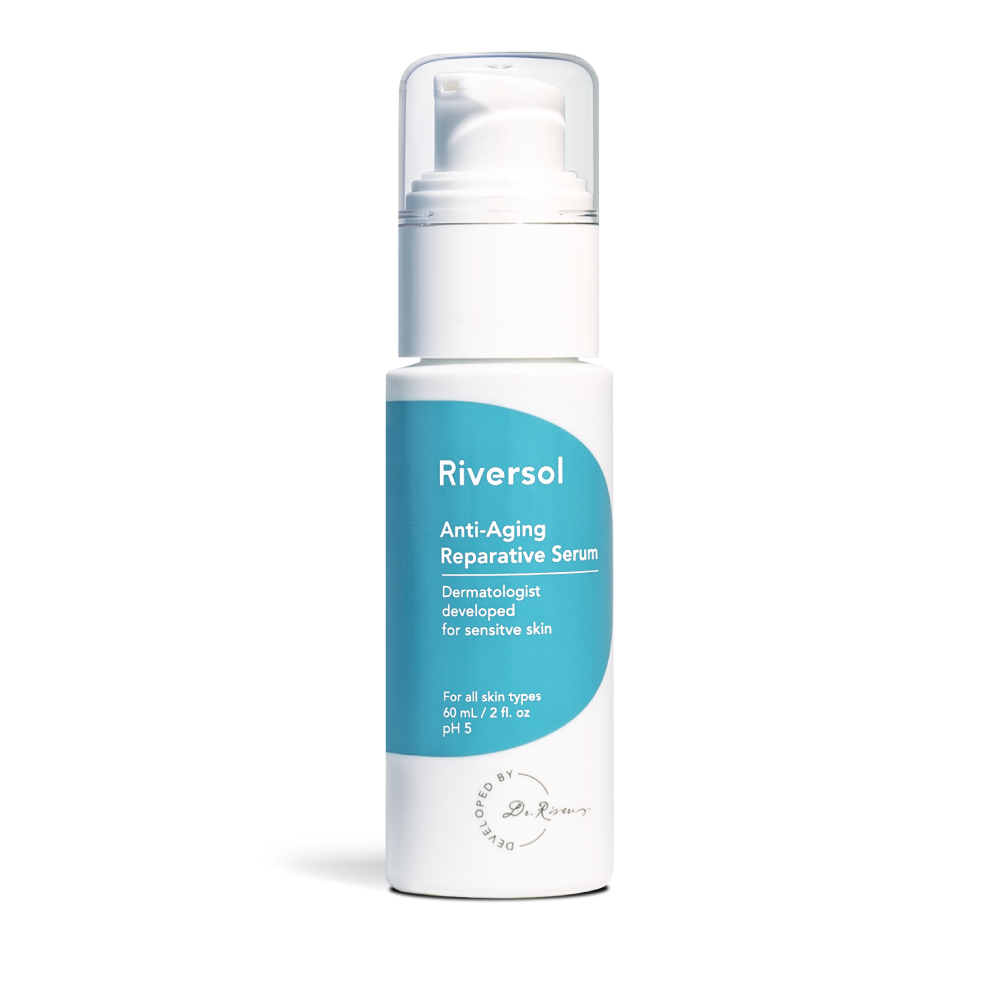
Dermatologist-developed for reactive skin types, the Anti-Aging Serum combines Aminopropyl Ascorbyl Phosphate with Hinokitiol (Beta-T) and Vitamin E in a neutral-pH base. This formulation addresses the primary barrier to vitamin C use in sensitive skin: the acidic sting and subsequent inflammation that derail consistent use.
Aminopropyl Ascorbyl Phosphate, the stabilized vitamin C derivative in this serum, delivers brightening results at a neutral pH, making it suitable for rosacea-prone and reactive skin that cannot tolerate conventional L-ascorbic acid formulas. The addition of Beta-Thujaplicin neutralizes inflammatory signaling that typically accompanies active ingredient introduction.
| Feature | Standard Vitamin C Products | Riversol Anti-Aging Serum |
|---|---|---|
| Key Ingredient | L-ascorbic acid at pH 2.5-3.5 | Aminopropyl Ascorbyl Phosphate at neutral pH |
| Formula pH | Acidic (2.5-3.5) | Neutral (5.5-7.0) |
| Skin Sensation | Tingling, warmth, potential stinging | Soothing, no irritation |
| Key Co-Active | Ferulic acid (additional acidic compound) | Hinokitiol (Beta-T, anti-inflammatory) |
This serum is best suited for individuals with diagnosed rosacea, a history of reactions to active ingredients, or persistent facial redness who still want measurable anti-aging and brightening results.

How to Introduce Vitamin C to Sensitive Skin Safely
Start With Frequency, Not Concentration
Begin application every third evening for two weeks. This allows the epidermis to adapt to the active ingredient without overwhelming barrier repair mechanisms. If no irritation occurs, increase to alternate evenings for another two weeks before progressing to daily use.
Layer Over Barrier-Repair Moisturizer
For extremely reactive skin, apply your vitamin C serum over (not under) a ceramide-based moisturizer for the first month. This technique, called buffering, slows penetration while maintaining efficacy. Once tolerance is established, reverse the order to maximize active delivery.

Pair With Broad-Spectrum Sun Protection
Vitamin C enhances photoprotection by neutralizing UV-induced free radicals. However, it does not replace sunscreen. Apply a mineral-based SPF 50 every morning, even on cloudy days. The combination of antioxidant serum and physical sunblock provides comprehensive defense against photoaging and hyperpigmentation.
Supporting Ingredients That Calm Reactive Skin
Niacinamide Compatibility
Contrary to outdated skincare advice, niacinamide and stabilized vitamin C derivatives can be used together without issue. According to a 2025 review in the Journal of Clinical and Aesthetic Dermatology, the pH incompatibility myth applies only to L-ascorbic acid at very low pH levels. Neutral-pH vitamin C formulas work synergistically with niacinamide to reduce redness and improve barrier function.
Ceramides and Lipid Replenishment
Sensitive skin often exhibits reduced ceramide levels in the stratum corneum, leading to increased transepidermal water loss. Using a moisturizer containing ceramides 1, 3, and 6-II alongside your vitamin C serum helps maintain the lipid matrix that prevents inflammatory triggers from penetrating deeper skin layers.
Avoiding Common Sensitizers
Even well-formulated vitamin C serums can irritate if they contain high concentrations of denatured alcohol, synthetic fragrance, or essential oils. These ingredients disrupt barrier lipids and trigger mast cell degranulation (the release of inflammatory compounds). Read ingredient labels carefully and avoid products listing alcohol denat, parfum, or citrus essential oils within the first seven ingredients.
Frequently Asked Questions
Can I use vitamin C serum if I have active rosacea flares?
During an active flare, focus on calming inflammation before introducing new actives. Wait until redness and sensitivity subside, then begin with a stabilized derivative formula at reduced frequency. Consult a dermatologist if flares persist beyond two weeks, as prescription treatments may be necessary to restore baseline before resuming cosmetic actives.
How long does it take to see results from vitamin C on sensitive skin?
Expect initial improvements in skin radiance within four to six weeks of consistent use. Measurable changes in hyperpigmentation and fine lines typically appear after 12 weeks, as collagen synthesis and melanin regulation occur gradually at the cellular level. Patience and consistency yield better outcomes than aggressive, sporadic application.
Should I use vitamin C in the morning or evening?
For sensitive skin, evening application often proves better tolerated. Skin undergoes repair processes during sleep, and nighttime use eliminates concern about potential photosensitivity or interaction with sunscreen. Morning application is acceptable once tolerance is established, particularly when paired with mineral sunscreen for enhanced UV protection.
Can I combine vitamin C serum with retinol?
Yes, but introduce them separately and gradually. Use vitamin C in the morning and retinol at night, or alternate evenings if both are new to your routine. Sensitive skin benefits from the slow, methodical introduction of one active at a time, waiting at least four weeks between new additions to isolate any reaction sources.
Why does my current vitamin C serum turn yellow?
Yellow or brown discoloration indicates oxidation of L-ascorbic acid. Oxidized vitamin C loses efficacy and may irritate skin further. Switch to a formula using Aminopropyl Ascorbyl Phosphate or another stabilized derivative, which resists oxidation even with repeated opening and exposure to air. Proper storage in opaque, airless pump bottles extends stability further.
References
- American Academy of Dermatology. (2026). Sensitive Skin: Prevalence and Management Guidelines. aad.org
- Journal of the American Academy of Dermatology. (2024). pH Requirements for Topical Ascorbic Acid Penetration and Stability. JAAD Publications.
- International Journal of Cosmetic Science. (2024). Comparative Stability Study of Vitamin C Derivatives in Topical Formulations.
- Journal of Clinical and Aesthetic Dermatology. (2025). Niacinamide and Vitamin C Compatibility: Updated Review of pH Interactions.
Related Topics to Explore:
About Dr. Jason Rivers, MD
Dr. Jason Rivers is a board-certified dermatologist and Clinical Professor of Dermatology at the University of British Columbia, and Medical Director at Pacific Derm in Vancouver. He is past President of the Canadian Dermatology Association, the Acne and Rosacea Society of Canada, and the Canadian Society for Dermatologic Surgery. Dr. Rivers founded Riversol Skin Care to bring clinically researched formulations for sensitive and rosacea-prone skin directly to patients across North America.