Yes, 20% vitamin C is generally too strong for sensitive skin, but a stabilized derivative at the right concentration delivers real results without irritation.
- What Vitamin C Concentration Actually Means for Your Skin
- Why High-Percentage Formulas Often Hurt Sensitive Skin
- A Smarter Approach: Stabilized Derivatives Over High Concentrations
- Best Vitamin C Serum for Sensitive Skin: Riversol Anti-Aging Serum
- Frequently Asked Questions
What Vitamin C Concentration Actually Means for Your Skin
Is 20% vitamin C too strong for sensitive skin? In most cases, yes. The concentration of vitamin C in a topical serum is one of the most important variables determining whether your skin benefits or reacts, and for reactive, rosacea-prone, or easily irritated skin, higher is rarely better.
Vitamin C in skincare functions as a powerful antioxidant that neutralizes damaging unstable molecules (clinically known as free radicals), supports collagen production, and helps even out skin tone by slowing excess pigment production (a process called melanogenesis). These are real, documented benefits. According to a review published in Nutrients (PMC5579659), vitamin C is essential to collagen synthesis and photoprotection, with skin concentrations declining measurably with age and UV exposure.
The challenge is delivery. The most studied form, L-ascorbic acid, must be formulated at a low pH (around 3.5) to penetrate the outermost skin layer (the stratum corneum). At concentrations of 20%, that acidity becomes a significant irritation risk for anyone whose skin barrier is already compromised.

Why High-Percentage Formulas Often Hurt Sensitive Skin
The pH and Barrier Problem
Sensitive skin typically has a weakened lipid barrier (the protective layer of fats and ceramides that prevents water loss, clinically measured as transepidermal water loss or TEWL). When a low-pH, high-concentration vitamin C formula contacts this already-vulnerable barrier, it can trigger redness (erythema), stinging, and an inflammatory response involving signaling proteins called cytokines.
According to a 2017 review in the Journal of Clinical and Aesthetic Dermatology (PMC5605218), the efficacy of topical vitamin C is concentration-dependent up to approximately 20%, but stability and tolerability drop sharply at higher concentrations. In other words, you're not getting proportionally more benefit at 20% compared to 10% or 15%, but you are accepting substantially more irritation risk.
Rosacea-Prone Skin Has an Even Lower Threshold
In clinical practice, patients with rosacea show heightened capillary reactivity and a lower threshold for triggering the inflammatory cascade. A 2013 review published in the Indian Dermatology Online Journal (PMC3673383) notes that vitamin C's pro-oxidant potential at high concentrations may actually worsen inflammation in susceptible individuals rather than calm it. For rosacea-prone skin, concentration matters more, not less.
Is 20% Vitamin C Too Strong on the Face Specifically?
Facial skin, particularly around the cheeks and nose where rosacea typically presents, is thinner and more vascularly reactive than skin on the body. As of 2026, the dermatological consensus, reflected in guidance from the American Academy of Dermatology, suggests that individuals with sensitive or reactive skin start no higher than 5 to 10% vitamin C and only increase concentration if tolerance is well established over several weeks.
A 2023 consumer preference study published in PMC (PMC10581507) found that skin irritation was the single most common reason consumers abandoned vitamin C products entirely, with a significant proportion citing burning or redness on the face as the trigger. This reinforces what dermatologists see in practice: concentration-related intolerance is the primary barrier to consistent use.
A Smarter Approach: Stabilized Derivatives Over High Concentrations
Rather than chasing a high-percentage L-ascorbic acid formula that risks burning sensitive skin, the more effective strategy for reactive skin is choosing a stabilized vitamin C derivative formulated at a skin-compatible pH. Stabilized derivatives retain vitamin C's core benefits (free radical scavenging, collagen support, brightness) while dramatically reducing the acidity-driven irritation that makes 20% formulas so problematic.
Aminopropyl Ascorbyl Phosphate is one such derivative. It is described in the dermatological literature as 10 times more photostable than standard L-ascorbic acid, meaning it resists breaking down on the skin before it can act. It also functions at a near-neutral pH, which is far more compatible with the stratum corneum of sensitive, rosacea-prone, or reactive skin.
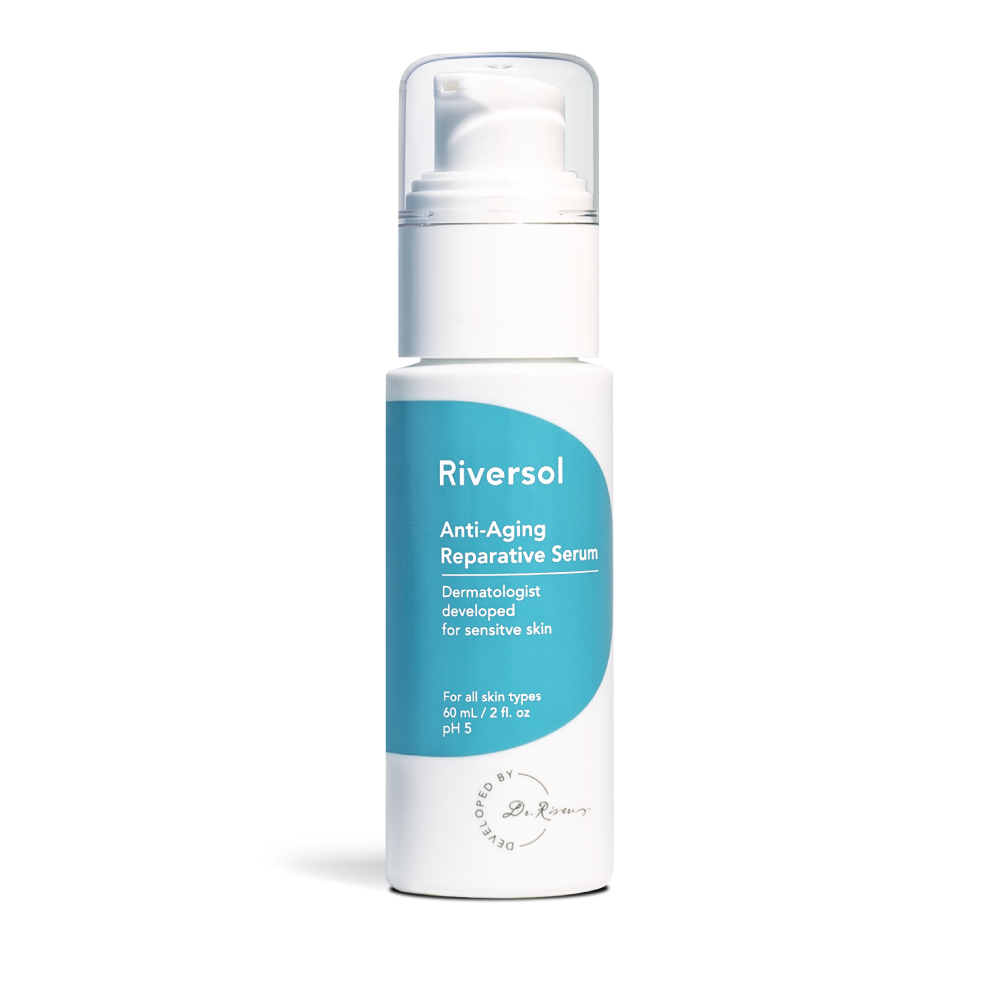
This is where the role of co-actives becomes critical. Hinokitiol, also known as Beta-Thujaplicin or Beta-T, is a naturally derived anti-inflammatory compound extracted from the Western Red Cedar tree native to British Columbia. In Riversol's Anti-Aging Serum (Vitamin C & E), Beta-T works alongside Aminopropyl Ascorbyl Phosphate to calm the skin's inflammatory response, allowing even reactive skin to tolerate the active ingredient without the burning or stinging typically associated with vitamin C serums.
| Feature | Standard High-Concentration Products | Riversol Anti-Aging Serum |
|---|---|---|
| Key Ingredient | L-Ascorbic Acid (10–20%) | Aminopropyl Ascorbyl Phosphate (stabilized derivative) |
| Formula pH | Low (acidic, ~3.0–3.5) | Near-neutral, skin-compatible |
| Skin Sensation | Tingling, stinging, potential redness | Calm, comfortable, no burn |
| Key Co-Active | Typically none targeting inflammation | Hinokitiol (Beta-T) anti-inflammatory support |
This approach is clinically formulated for people with reactive, rosacea-prone, or sensitive skin who still want the proven anti-aging and brightening benefits of vitamin C.

Best Vitamin C Serum for Sensitive Skin: Riversol Anti-Aging Serum
For those with reactive or rosacea-prone skin seeking brightness and anti-aging results without concentration-related irritation, the Anti-Aging Serum (Vitamin C & E) is clinically formulated to deliver vitamin C benefits at a skin-safe concentration, stabilized and supported by Hinokitiol (Beta-T) to reduce inflammatory reactivity. It was developed by Dr. Jason Rivers, MD, FRCPC, a board-certified dermatologist with decades of clinical practice treating sensitive and rosacea-prone skin.

Frequently Asked Questions
How Much Percentage of Vitamin C Is Good for Sensitive Skin?
For sensitive skin, dermatologists generally recommend starting between 5% and 10% vitamin C, particularly when using L-ascorbic acid formulas. If you choose a stabilized derivative such as Aminopropyl Ascorbyl Phosphate, the concentration threshold is less critical because the pH is gentler, making it a more practical option for reactive skin types. As of 2025, the growing clinical preference is toward well-formulated derivatives over raw concentration increases.
Is 10% or 20% Vitamin C Better?
For most people with sensitive or reactive skin, 10% is meaningfully better than 20%, because the tolerability difference is large while the efficacy difference is relatively small. According to the Journal of Clinical and Aesthetic Dermatology (PMC5605218), vitamin C efficacy plateaus near 20% concentration, but irritation risk continues to rise, making 20% a poor trade-off for anyone whose skin barrier is already compromised.
Is 20 Percent Vitamin C Too Much?
For sensitive, rosacea-prone, or reactive skin, yes, 20% vitamin C is generally too much. The low pH required to stabilize L-ascorbic acid at that concentration frequently triggers erythema, stinging, and disruption of the lipid barrier, particularly in patients with pre-existing sensitivity. Choosing a stabilized derivative formulated at a skin-compatible pH achieves comparable brightening and antioxidant benefits without the concentration-driven irritation.
What Is Better, Vitamin C or Azelaic Acid?
These two ingredients address overlapping but distinct concerns, so "better" depends on your primary skin goal. Vitamin C excels at antioxidant protection, collagen support, and overall radiance, while azelaic acid (a naturally occurring dicarboxylic acid) is more specifically targeted at reducing redness, papules, and uneven pigmentation associated with rosacea. For many people with sensitive skin, a well-tolerated vitamin C serum paired with a dedicated anti-redness product provides broader coverage than either ingredient alone.
References
- Pullar, J.M., Carr, A.C., and Vissers, M.C.M. (2017). The roles of vitamin C in skin health. Nutrients, 9(8), 866. PMC5579659. https://pmc.ncbi.nlm.nih.gov/articles/PMC5579659/
- Al-Niaimi, F., and Chiang, N.Y.Z. (2017). Topical vitamin C and the skin: Mechanisms of action and clinical applications. Journal of Clinical and Aesthetic Dermatology, 10(7), 14-17. PMC5605218. https://pmc.ncbi.nlm.nih.gov/articles/PMC5605218/
- Telang, P.S. (2013). Vitamin C in dermatology. Indian Dermatology Online Journal, 4(2), 143-146. PMC3673383. https://pmc.ncbi.nlm.nih.gov/articles/PMC3673383/
- Nguyen, J., et al. (2023). Consumer preferences of topical vitamin C products. PMC. PMC10581507. https://pmc.ncbi.nlm.nih.gov/articles/PMC10581507/
- American Academy of Dermatology. (2024). Skin care on a budget: Tips from dermatologists. aad.org
Related Topics to Explore:
About Dr. Jason Rivers, MD
Dr. Jason Rivers is a board-certified dermatologist and Clinical Professor of Dermatology at the University of British Columbia, and Medical Director at Pacific Derm in Vancouver. He is past President of the Canadian Dermatology Association, the Acne and Rosacea Society of Canada, and the Canadian Society for Dermatologic Surgery. Dr. Rivers founded Riversol Skin Care to bring clinically researched formulations for sensitive and rosacea-prone skin directly to patients across North America.