Reviewed by Dr. Jason Rivers, MD, FRCPC (June 2026)
Retinol burn typically clears in 3 to 14 days, but actively calming inflammation and restoring your barrier helps you heal faster, without prolonged irritation.
Retinol burn is a reaction where the outer skin layer (clinically known as the stratum corneum) becomes acutely irritated after retinol exposure, presenting as redness, stinging, peeling, and tightness. How long until retinol burn goes away depends on severity: mild cases resolve in 3 to 5 days, while more significant reactions can take 1 to 2 weeks. The good news is that how you care for your skin during recovery actively influences that timeline.
- How Long Does Retinol Burn Last?
- What Retinol Burn Looks and Feels Like
- How to Heal Retinol Burn Faster: Active Recovery vs. Waiting
- Best Moisturizer for Retinol Burn Recovery: Daily Moisturizing Cream
- Frequently Asked Questions
How Long Does Retinol Burn Last?
The timeline for retinol burn recovery follows a fairly predictable pattern, though individual skin sensitivity and the concentration of retinol used both affect how quickly you heal. As of 2026, dermatologists broadly categorise retinol irritation into two tiers.
- Mild irritation: Slight redness, minor tightness, some flaking. Typically resolves in 3 to 5 days with proper barrier support.
- Moderate to severe reaction: Significant burning, widespread peeling, pronounced redness (clinically described as erythema). Can persist for 1 to 2 full weeks.
According to the Journal of the American Academy of Dermatology, side effects including burning, dryness, and erythema are well-documented early consequences of topical retinoid use, particularly during the first weeks of introduction. People with rosacea, eczema, or already-compromised skin barriers tend to experience longer and more intense reactions. If visible irritation persists beyond 2 weeks, a visit to a board-certified dermatologist is warranted.

What Retinol Burn Looks and Feels Like
Retinol burn is distinct from the normal adjustment period (often called the retinol purge) that some users experience. The purge primarily involves temporary breakouts as cell turnover accelerates. Burn, by contrast, is a surface-layer inflammatory response affecting the epidermis itself.
Common signs include:
- Intense stinging or burning sensation, especially after cleansing
- Visible redness and warmth (vasodilation of superficial capillaries)
- Peeling or flaking skin, particularly around the nose, mouth, and cheeks
- Raw, sensitised patches that sting when moisturiser is applied
The American Academy of Dermatology notes that retinol works by accelerating cell turnover, and while this delivers anti-aging benefits, it temporarily disrupts the skin's lipid barrier, increasing transepidermal water loss (TEWL) and leaving the epidermis vulnerable to environmental triggers. A 2024 body of research from the AAD reinforces that those with pre-existing barrier conditions are at significantly higher risk of pronounced irritation.
How to Heal Retinol Burn Faster: Active Recovery vs. Waiting
The question of how long until retinol burn goes away is partly answered by biology, and partly by what you put on your skin during recovery. Passive waiting, applying nothing or the wrong products, can extend your discomfort. Active barrier repair shortens it.
Step 1: Stop Retinol Immediately and Simplify Your Routine
Remove retinol, active exfoliants, and any potential irritants from your routine entirely. Use only a gentle, non-foaming cleanser and a barrier-focused moisturiser until the reaction subsides. The inflammatory cascade (the chain of cytokine-driven skin responses triggered by barrier disruption) needs time and the right environment to resolve.
Step 2: Prioritise Ceramides and Lipid Barrier Repair
Ceramides are lipid molecules that form a critical part of the skin's moisture barrier. When retinol depletes these lipids, TEWL spikes and redness intensifies. According to a randomised controlled trial published on PubMed (NCBI, 2019), formulations that actively support the skin barrier during retinoid use significantly reduced reported side effects including burning and erythema over an 8-week period. This supports using a barrier-repair moisturiser rather than a lightweight gel during recovery.
Step 3: Avoid Heat, Friction, and Sun Exposure
Heat triggers vasodilation, worsening redness in already-inflamed skin. UV-induced oxidative stress compounds barrier damage. Keep water temperature cool when cleansing, skip physical exfoliation entirely, and apply a mineral SPF 50+ every morning even while healing indoors.
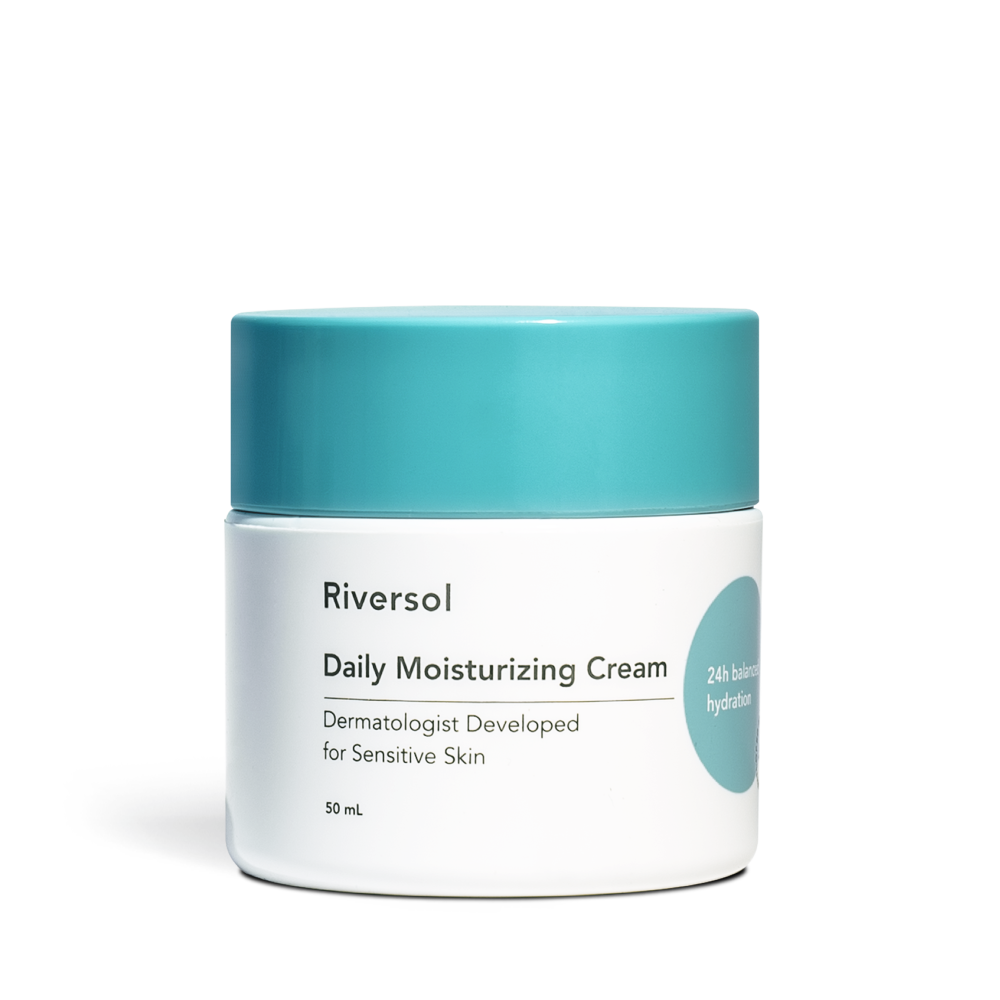
Best Moisturizer for Retinol Burn Recovery: Daily Moisturizing Cream
Most barrier repair moisturisers address dryness but do not actively address the inflammatory component of retinol burn. For skin that is reactive, rosacea-prone, or genuinely sensitised, the inflammation itself needs to be calmed, not just the surface dryness.
Hinokitiol, also known as Beta-Thujaplicin (Beta-T), is the active compound extracted from the Western Red Cedar tree native to British Columbia. In the Daily Moisturizing Cream, Beta-T works as a clinically researched anti-inflammatory that helps interrupt the inflammatory cascade triggered by retinol overuse, while Shea Butter and stabilised Vitamin C (Aminopropyl Ascorbyl Phosphate) support lipid replenishment and barrier restoration simultaneously.
| Feature | Standard Barrier Moisturiser | Riversol Daily Moisturizing Cream |
|---|---|---|
| Key Ingredient | Ceramides or glycerin | Hinokitiol (Beta-T) plus Shea Butter |
| Formula Texture | Lightweight lotion or gel cream | Rich cream, non-greasy, dermatologist-formulated |
| Skin Sensation | Hydrating, occasionally stinging on reactive skin | Formulated to soothe on contact for sensitive and reactive skin |
| Key Co-Active | Often none beyond humectants | Stabilised Vitamin C (Aminopropyl Ascorbyl Phosphate) and Vitamin E |
Dermatologist-developed for sensitive and rosacea-prone skin, the Daily Moisturizing Cream addresses both the inflammatory and barrier-depletion components of retinol burn, making it a purposeful choice during recovery rather than a generic moisturiser.
For reactive skin seeking genuine barrier repair alongside anti-inflammatory support during retinol burn recovery, Daily Moisturizing Cream is formulated specifically to calm the skin while rebuilding its lipid layer.

Frequently Asked Questions
How Do You Heal a Retinol Burn Fast?
Stop retinol immediately and strip your routine back to three steps: a gentle non-foaming cleanser, a barrier-repair moisturiser containing anti-inflammatory and lipid-restoring ingredients, and a mineral SPF 50+ every morning. Avoid heat, friction, and any active ingredients until all visible irritation has resolved. According to the Journal of the American Academy of Dermatology, topical formulations that support the barrier during retinoid use are associated with meaningfully reduced burning and erythema.
Does Retinol Burn Mean It's Working?
No. This is one of the most persistent skincare myths, and it is worth correcting clearly. Burning and stinging are signs of barrier disruption and irritation, not accelerated collagen synthesis or cell turnover. The American Academy of Dermatology notes that effective retinol use should involve a gradual introduction period that minimises irritation, not maximises it. Burning indicates the retinol concentration or frequency was too high for your current skin tolerance.
What Is the 1/2/3 Rule for Retinol?
The 1/2/3 rule is a practical introduction method: apply retinol once per week for the first month, twice per week in the second month, and three times per week (or every other night) in the third month. This graduated approach allows your stratum corneum time to build tolerance and reduces the risk of retinol burn occurring in the first place. As of 2026, this method is widely recommended by dermatologists for sensitive and reactive skin patients beginning retinol for the first time.
Can Retinol Damage Be Reversed?
Yes, in the vast majority of cases, retinol-related skin irritation is fully reversible. The epidermis regenerates rapidly, and with consistent barrier support, most retinol burn resolves completely within 1 to 2 weeks. Longer-term or repeated over-use without adequate recovery periods can compound sensitivity, but this is manageable with proper clinical guidance. If you experience significant or recurring reactions, a consultation with a board-certified dermatologist such as Dr. Jason Rivers, MD, FRCPC is recommended.
The Bottom Line on How Long Until Retinol Burn Goes Away
For most people, mild retinol burn clears in 3 to 5 days. More significant reactions take 1 to 2 weeks. But the keyword here is "most people." Those with rosacea, eczema, or compromised skin barriers consistently experience longer recovery windows, and passive waiting with no targeted care extends that timeline unnecessarily.
Trusted by over 1,000,000 customers and developed by Dr. Jason Rivers, MD, FRCPC, a board-certified dermatologist, Riversol's approach is built on the principle that reactive skin deserves active support, not just patience. Formulated and manufactured in Canada, the Daily Moisturizing Cream is among the few barrier-repair moisturisers formulated specifically for sensitive and rosacea-prone skin that combines an anti-inflammatory active (Beta-T) with lipid-restoring and antioxidant co-actives in a single, gentle formula.
You do not have to simply wait out retinol burn. You can actively heal it.
References
- American Academy of Dermatology. (2024). Retinoid or retinol? Everyday skin care secrets. aad.org. Retrieved from https://www.aad.org/public/everyday-care/skin-care-secrets/anti-aging/retinoid-retinol
- Dhaliwal, S., et al. (2019). Randomized parallel control trial checking the efficacy and safety of topical retinol and retinoid formulations. PubMed, National Center for Biotechnology Information. Retrieved from https://pubmed.ncbi.nlm.nih.gov/31222977/
- Leyden, J., et al. (1998). The growing importance of topical retinoids in clinical dermatology. Journal of the American Academy of Dermatology, 39(2), S1-S23. Retrieved from https://www.jaad.org/article/S0190-9622(98)70437-2/fulltext
- Gold, M., et al. (2012). Open label study of 1% retinol and tolerability outcomes in sensitive skin over 24 weeks. Journal of the American Academy of Dermatology. Retrieved from https://www.jaad.org/article/S0190-9622(12)01384-9/pdf
- American Academy of Dermatology. (2024). Isotretinoin: The truth about safety, side effects, and skin care. aad.org. Retrieved from https://www.aad.org/public/diseases/acne/derm-treat/isotretinoin/side-effects
Related Topics to Explore:
About Dr. Jason Rivers, MD
Dr. Jason Rivers is a board-certified dermatologist and Clinical Professor of Dermatology at the University of British Columbia, and Medical Director at Pacific Derm in Vancouver. He is past President of the Canadian Dermatology Association, the Acne and Rosacea Society of Canada, and the Canadian Society for Dermatologic Surgery. Dr. Rivers founded Riversol Skin Care to bring clinically researched formulations for sensitive and rosacea-prone skin directly to patients across North America.