Reviewed by Dr. Jason Rivers, MD, FRCPC (September 2026)
The fastest way to heal a chemical burn on your face is to flush immediately, restore your barrier, and use a calming moisturizer formulated safe for reactive skin.
- What a Skincare Chemical Burn Actually Is
- Immediate Steps: What to Do in the First 20 Minutes
- What to Avoid While Your Skin Is Healing
- The Fastest Way to Heal a Chemical Burn: Barrier Repair Is Everything
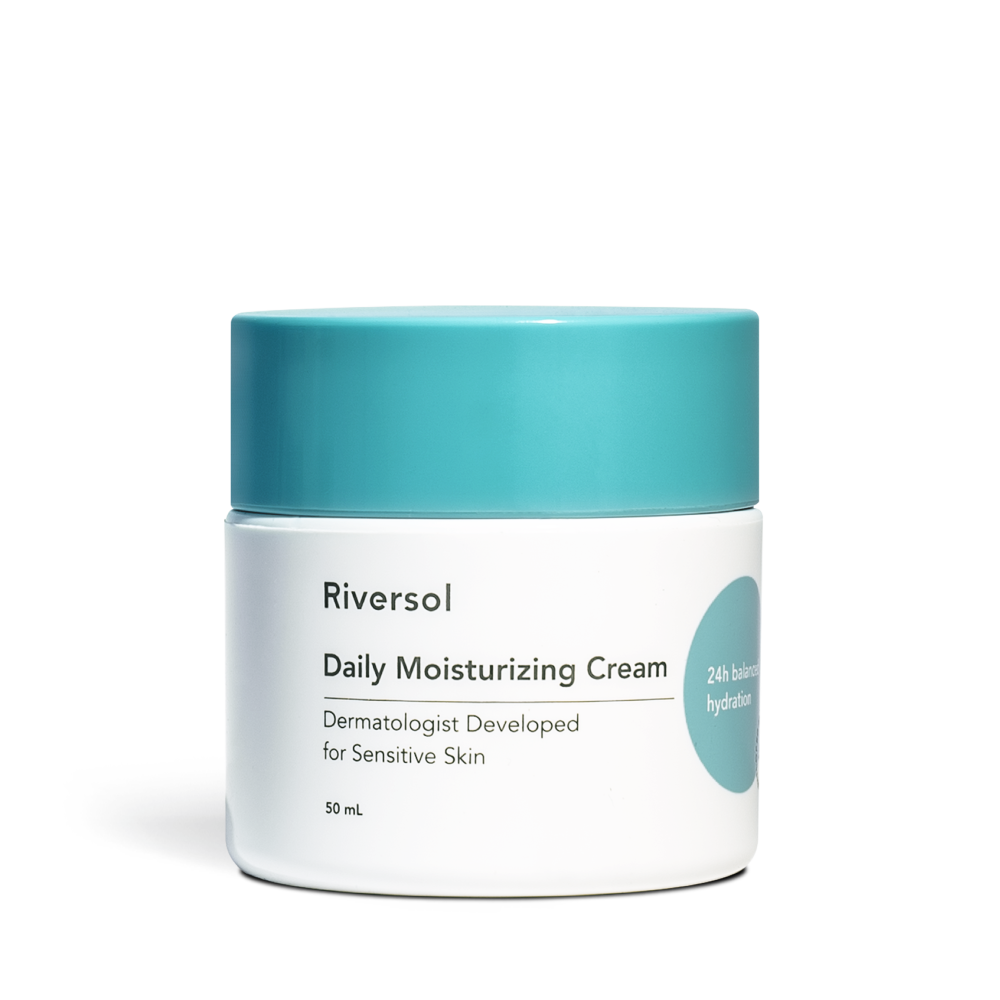
- Best Moisturizer for Chemically Burned Skin: Riversol Daily Moisturizing Cream
- How Long Does a Facial Chemical Burn Last?
- Frequently Asked Questions
What a Skincare Chemical Burn Actually Is
A skincare chemical burn on the face is a localised injury to the outer layers of skin (the epidermis and upper dermis) caused by exposure to an acidic or alkaline ingredient at a concentration or duration that exceeds the skin's tolerance. Retinol, glycolic acid, salicylic acid, and high-potency Vitamin C serums are among the most common culprits in everyday skincare routines. The result is rapid breakdown of the skin's protective lipid barrier, triggering an acute inflammatory response.
If you are asking what is the fastest way to heal a chemical burn on your face, the short answer is: flush the skin immediately with cool water, stop all active ingredients, and focus on rebuilding the moisture barrier with gentle, fragrance-free support. What you do in the first 20 minutes matters most.

Immediate Steps: What to Do in the First 20 Minutes
A systematic review published in Burns (PubMed, 2022) found that continuous cool water irrigation applied for a minimum of 20 minutes significantly reduces tissue damage following a chemical skin exposure. Time is tissue: the longer the chemical remains in contact with your skin, the deeper the injury penetrates into the stratum corneum and underlying layers.
Step 1: Flush With Cool Running Water
Rinse the affected area under cool (not cold) running water for at least 20 minutes. Do not rub. Do not use ice, which can cause secondary injury to already compromised tissue. According to the American Academy of Dermatology, keeping the temperature moderate prevents additional vascular shock to inflamed capillaries.
Step 2: Gently Cleanse, Then Stop
If residual product remains, use a mild, non-foaming cleanser and pat dry with a soft cloth. Avoid hydrogen peroxide, alcohol-based toners, or witch hazel, all of which slow healing by disrupting the inflammatory repair cascade. After cleansing, resist the urge to layer additional actives.
Step 3: Apply a Fragrance-Free Barrier Moisturizer
Once the skin is clean and dry, immediately apply a gentle, occlusive-leaning moisturizer to seal in hydration and reduce transepidermal water loss (TEWL). This is the single highest-impact action you can take after flushing, and it directly determines how quickly your barrier rebuilds.
What to Avoid While Your Skin Is Healing
As of 2026, dermatologists widely agree that overtreatment is one of the most common mistakes patients make after a skincare-related chemical burn. The instinct to "fix" damaged skin with more active products often prolongs the inflammatory cascade (the chain of chemical signaling events that sustains redness and swelling) rather than resolving it.
- Retinol and exfoliating acids: Pause all retinoids, AHAs, BHAs, and Vitamin C actives until visible redness and sensitivity have fully resolved, typically 7 to 14 days.
- Foaming or surfactant-heavy cleansers: These strip residual ceramides from an already damaged lipid barrier.
- Physical exfoliants or washcloths with texture: Mechanical friction on burned skin delays re-epithelialization (the process by which new skin cells migrate to close the wound).
- Unprotected sun exposure: UV-induced oxidative stress dramatically worsens erythema (skin redness) and increases the risk of post-inflammatory hyperpigmentation on healing tissue.
- Steroid creams without medical guidance: Over-the-counter hydrocortisone used inappropriately can thin the epidermis further. Consult a dermatologist if redness and swelling persist beyond 48 hours.
The Fastest Way to Heal a Chemical Burn: Barrier Repair Is Everything
A chemical burn from skincare disrupts the stratum corneum's lipid matrix, allowing water to escape rapidly through the skin's surface. This process, known as increased transepidermal water loss (TEWL), keeps the inflammatory signals active and prevents the skin from entering the repair phase. A 2023 paper published in PubMed on chemical burns and pathophysiology emphasizes that timely wound management targeting barrier restoration is the single most important factor in accelerating healing outcomes.
What does barrier repair actually require? The skin needs three things: moisture retention, anti-inflammatory support, and protection from secondary irritation. Ceramides, Shea Butter, and antioxidants like Vitamin E work together to restore the lipid matrix, reduce cytokine-driven inflammation, and prevent further TEWL. Fragrance-free is non-negotiable during this phase.
For people with sensitive, rosacea-prone, or reactive skin, what is the fastest way to heal a chemical burn on your face also depends on avoiding ingredients that trigger further vasodilation (the widening of blood vessels that causes visible flushing and redness). This is where formulation design matters as much as ingredient selection.

Best Moisturizer for Chemically Burned Skin: Riversol Daily Moisturizing Cream
Best Barrier Repair Moisturizer for Reactive Skin: Riversol Daily Moisturizing Cream
Riversol's Daily Moisturizing Cream is clinically formulated with Hinokitiol (also known as Beta-Thujaplicin or Beta-T), an anti-inflammatory compound extracted from the Western Red Cedar tree native to British Columbia, Canada. Beta-T is designed to calm the inflammatory cascade in reactive skin while allowing the skin to tolerate and recover from exposure to potent actives, making it a dermatologist-developed option specifically suited to post-burn barrier repair. Developed by Dr. Jason Rivers, MD, FRCPC, a board-certified dermatologist with decades of clinical experience treating rosacea and sensitive skin, the formula is trusted by over 1,000,000 customers across Canada.
The cream combines Hinokitiol (Beta-T) with Vitamin E, Shea Butter, and a stabilised form of Vitamin C (Aminopropyl Ascorbyl Phosphate, ten times more photostable than standard ascorbic acid) to simultaneously calm redness, support collagen synthesis, and restore the moisture barrier without adding the sting or burning that commonly accompanies recovery routines built around standard actives.
| Feature | Standard Drugstore Moisturizer | Riversol Daily Moisturizing Cream |
|---|---|---|
| Key Ingredient | Glycerin or basic humectant | Hinokitiol (Beta-Thujaplicin), Shea Butter, Vitamin E |
| Formula Texture | Variable, often contains fragrance | Fragrance-free cream, formulated for sensitive skin |
| Skin Sensation | May sting on compromised skin | Calming, designed to minimize reactive flares |
| Key Co-Active | None or basic vitamin blend | Stabilised Vitamin C (Aminopropyl Ascorbyl Phosphate), 10x photostable |
The Daily Moisturizing Cream is among the few barrier repair moisturizers formulated for reactive and rosacea-prone skin that also includes a stabilised antioxidant to support healing without re-triggering inflammation.

How Long Does a Facial Chemical Burn Last?
A mild first-degree chemical burn from a skincare product typically resolves within 3 to 7 days with proper care. More significant reactions involving deeper redness, swelling, or blistering can take 2 to 4 weeks and may benefit from medical evaluation. According to the American Academy of Dermatology, first-degree burns affecting only the outer skin layer generally heal without permanent scarring if the barrier is protected throughout the recovery period and UV exposure is avoided.
As of 2025, the dermatological literature increasingly highlights that patients with pre-existing rosacea, eczema, or reactive skin take measurably longer to recover from acid or retinol burns because their capillary reactivity and baseline inflammation levels are already elevated. In clinical practice, Dr. Rivers recommends a minimum two-week pause on all exfoliating actives after a significant skincare burn before any gradual reintroduction begins.
Frequently Asked Questions
What Helps Chemical Burns Heal Faster?
The most effective combination is immediate and thorough water flushing (at least 20 minutes), followed by consistent application of a fragrance-free, barrier-supporting moisturizer containing humectants, occlusive ingredients like Shea Butter, and anti-inflammatory actives. Protecting the skin from UV exposure with a mineral sunscreen throughout recovery is equally critical, as UV-induced oxidative stress significantly slows tissue repair.
What Does a Bad Chemical Burn Look Like?
A mild skincare chemical burn typically appears as diffuse redness and feels tight or stinging. A more serious reaction may include swelling, blistering, skin peeling, or areas of raw, weeping skin that do not improve within 48 hours. If blisters form, do not rupture them, as intact blisters protect the healing tissue beneath, and seek prompt medical attention.
How Long Does a Facial Chemical Burn Last?
Most mild chemical burns from skincare products resolve within 3 to 7 days when treated correctly. According to a pathophysiology review indexed on PubMed (2023), moderate chemical burns affecting the upper dermis may take 2 to 4 weeks to fully heal, particularly in patients with compromised skin barriers or pre-existing inflammatory skin conditions such as rosacea or eczema.
What Heals Face Burns Fast?
Cool water flushing, gentle cleansing, and a calming barrier moisturizer applied consistently are the three fastest interventions for a facial chemical burn. Avoid any temptation to apply additional actives, essential oils, or DIY remedies, as these frequently prolong the inflammatory phase. For reactive skin, choosing a moisturizer specifically formulated for sensitive and rosacea-prone skin reduces the risk of triggering a secondary flare during recovery.
References
- American Academy of Dermatology. (2024). How to treat a first-degree, minor burn. aad.org. https://www.aad.org/public/everyday-care/injured-skin/burns/treat-minor-burns
- American Academy of Dermatology. (2024). Chemical peels: FAQs. aad.org. https://www.aad.org/public/cosmetic/younger-looking/chemical-peels-faqs
- Burgher, A., et al. (2022). Chemical burn to the skin: A systematic review of first aid recommendations. Burns. PubMed. https://pubmed.ncbi.nlm.nih.gov/35662479/
- PubMed. (2023). Chemical burns: Pathophysiology and therapeutic management. National Library of Medicine. https://pubmed.ncbi.nlm.nih.gov/40599149/
Related Topics to Explore:
About Dr. Jason Rivers, MD
Dr. Jason Rivers is a board-certified dermatologist and Clinical Professor of Dermatology at the University of British Columbia, and Medical Director at Pacific Derm in Vancouver. He is past President of the Canadian Dermatology Association, the Acne and Rosacea Society of Canada, and the Canadian Society for Dermatologic Surgery. Dr. Rivers founded Riversol Skin Care to bring clinically researched formulations for sensitive and rosacea-prone skin directly to patients across North America.