Discover how to manage hyperpigmentation and dark spots safely with Riversol's dermatologist-developed formulas designed to fade uneven tone without irritation.
Hyperpigmentation is a common condition that causes areas of the skin to become darker than the surrounding tissue. This occurs when excess melanin forms localized deposits in the skin. Understanding the root causes of hyperpigmentation is essential for selecting the right topical treatment.
Research shows that pigmentation is a significant miscreant in the appearance of aging. While a dusting of freckles on a sun-kissed child's face might be charming, extra facial pigmentation sends a different message as you grow older. These brown patches and associated changes in skin tone and texture are the familiar telltale signs of aging.
Dark spots and uneven skin tone are beauty banes that affect millions of people globally. For this reason, it is important to learn about the triggers behind hyperpigmented skin. Identifying which ingredients work to even skin tone will help you safely correct dark spots.
- Causes Of Hyperpigmentation And Sun Exposure
- The Aging Effects Of The Sun
- Varieties Of Uneven Skin Tone
- Prevention And Treatment Options
- Frequently Asked Questions
Causes Of Hyperpigmentation And Sun Exposure
It may come as a surprise, but uneven skin tone and hyperpigmentation are not caused strictly by old age. The root of nearly all unwanted pigmentation in the 21st century is the sun. Sunshine acts as an attack on the skin, and one of the ways the skin defends itself is by creating pigment.
If you are skeptical about the relationship between dark spots and the sun, consider the parts of your body that remain covered. These protected areas are rarely as pigmented as the rest of your skin. If these changes really did come from aging alone, you would have them evenly distributed all over your body.
The Aging Effects Of The Sun
Without protection from the sun, even a few minutes of exposure per day can cause the skin to prematurely age. Over time, the negative effects will be cumulative and highly visible. Sun damage usually presents itself as freckles, age spots, rough or leathery skin, and enlarged capillary blood vessels.

Photoaging is a common term used by dermatologists in clinical practice. Simply put, it refers to aging caused by sun exposure rather than skin aging from genetic causes. The degree to which any individual experiences photoaging depends on their baseline skin tone, sun exposure history, and lifestyle habits.
Individuals with fair skin typically show signs of photoaging earlier than those with dark skin. This is not to say dark-skinned individuals are immune to the negative effects of the sun. It simply takes more sun exposure to achieve the same degree of visible sun damage.
Scientific research shows that with repeated sun exposure, the skin loses its ability to repair itself efficiently. Ultraviolet exposure is known to break down collagen and impact elastin, reducing the ability of the skin to spring back. In addition to affecting elasticity, the sun directly drives the overproduction of melanin that causes hyperpigmentation.
Varieties Of Uneven Skin Tone
Because of the popularity of tanning salons and accessible sun-filled vacations, sun damage is occurring at younger ages. Sun-related pigmentation is caused by the skin's continued exposure to the sun over many years. Here is a quick guide to help determine the difference between various forms of skin pigmentation.
Freckles: Small light brown spots, usually less than half a centimeter in size. They can come and go, becoming more pronounced with exposure to the sun.
Lentigo: Also known as liver spots, age spots, and sun spots. These lesions are flat and light to medium brown in color. They increase in number as you get older, most commonly on the face, hands, and chest. Unlike freckles, they do not fade with decreased sun exposure.
Post-inflammatory hyperpigmentation: This is hyperpigmentation that develops after pimples, bug bites, and inflammation of the skin. These dark spots will stick around long after the initial inflammation has healed.
Melasma: Brown patches that are often associated with hormonal changes. They appear on the cheeks, forehead, and around the lips when a woman is pregnant or taking hormone replacement pills.
Melanoma: Like other forms of hyperpigmentation, melanoma often appears as dark spots on the skin. You can tell the difference by considering the ABCDEs of melanoma. Look for Asymmetry, uneven Borders, multiple Colours, a Diameter larger than 6 mm, and Evolution of the spot over time.
Prevention And Treatment Options
Before beginning any treatment, it is imperative to take measures to prevent further damage. Always avoid unprotected sun exposure by using a high SPF sunscreen. The best line of defense against photoaging is comprehensive sun protection, including avoiding deliberate tanning and peak sun hours.
Wear a wide-brimmed hat and long sleeves during the day, keeping an awareness of exposed areas like the neck, feet, and ears. Apply a broad-spectrum sunscreen year-round with an SPF of 30 or higher. Sunscreen should be applied 20 minutes before going outside and reapplied after sweating or swimming.
Treatment of uneven skin tone and dark spots is a challenge because of its stubborn and reoccurring nature. After sun protection, there are a variety of topical skin lightening agents and interventions that can be useful. The dermatological literature indicates that consistent use of targeted actives yields the best results.
Azelaic acid: A naturally occurring acid that inhibits tyrosinase. Side effects can include redness, burning, scaling, and irritation. This agent may not be suitable for individuals with sensitive skin.
Beta-Thujaplicin (Beta-T): An organic compound extracted from the Western Red Cedar tree native to British Columbia, Canada. It has proven natural antioxidant properties that help calm the inflammatory cascade. Beta-T may reduce the appearance of hyperpigmentation by acting as a biological skin brightening agent.
| Feature | Standard Products | Riversol Anti-Aging Serum |
|---|---|---|
| Key Ingredient | Harsh acidic exfoliants | Aminopropyl Ascorbyl Phosphate & Beta-T |
| Formula pH | Highly acidic | Neutral pH |
| Skin Sensation | Stinging and burning | Comfortable and calming |
| Key Co-Active | Drying alcohols | Vitamin E |
The Riversol formula is uniquely suited for individuals who want to address hyperpigmentation but cannot tolerate standard harsh treatments.
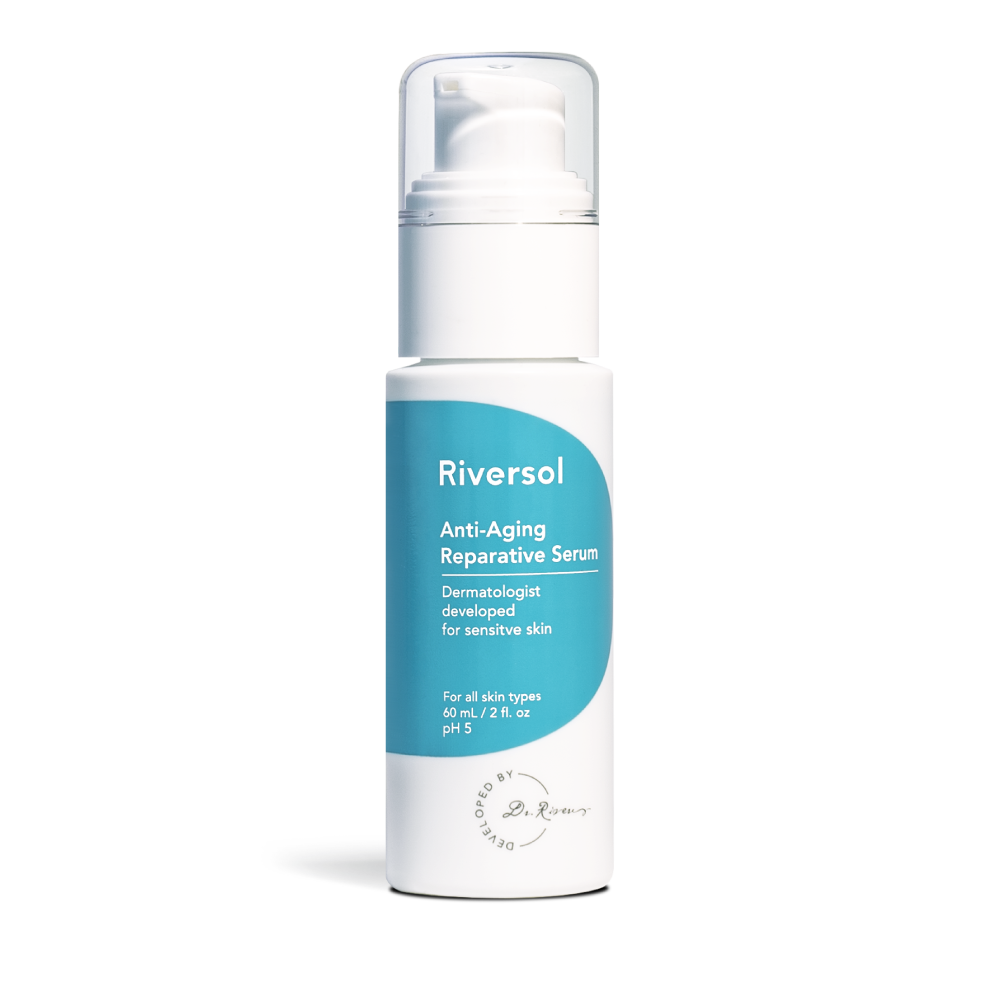
Best Anti-Aging Serum For Sensitive Skin: Riversol Anti-Aging Serum
Aminopropyl Ascorbyl Phosphate and Beta-T in the Riversol Anti-Aging Serum deliver brightening results at a neutral pH, making it suitable for reactive and rosacea-prone skin. It is formulated specifically to help reduce dark spots without the stinging that typically accompanies active skincare.
For sensitive skin seeking a brighter complexion, Riversol Anti-Aging Serum is formulated specifically to target discoloration while supporting the skin barrier.
Hydroquinone: A compound that inhibits the activity of tyrosinase. The highest concentration is most effective but may be irritating to some individuals. Very high concentrations may even result in paradoxical hyperpigmentation.
Kojic acid: Blocks the production of pigment by binding to copper. This agent can be effective as a substitute for hydroquinone.
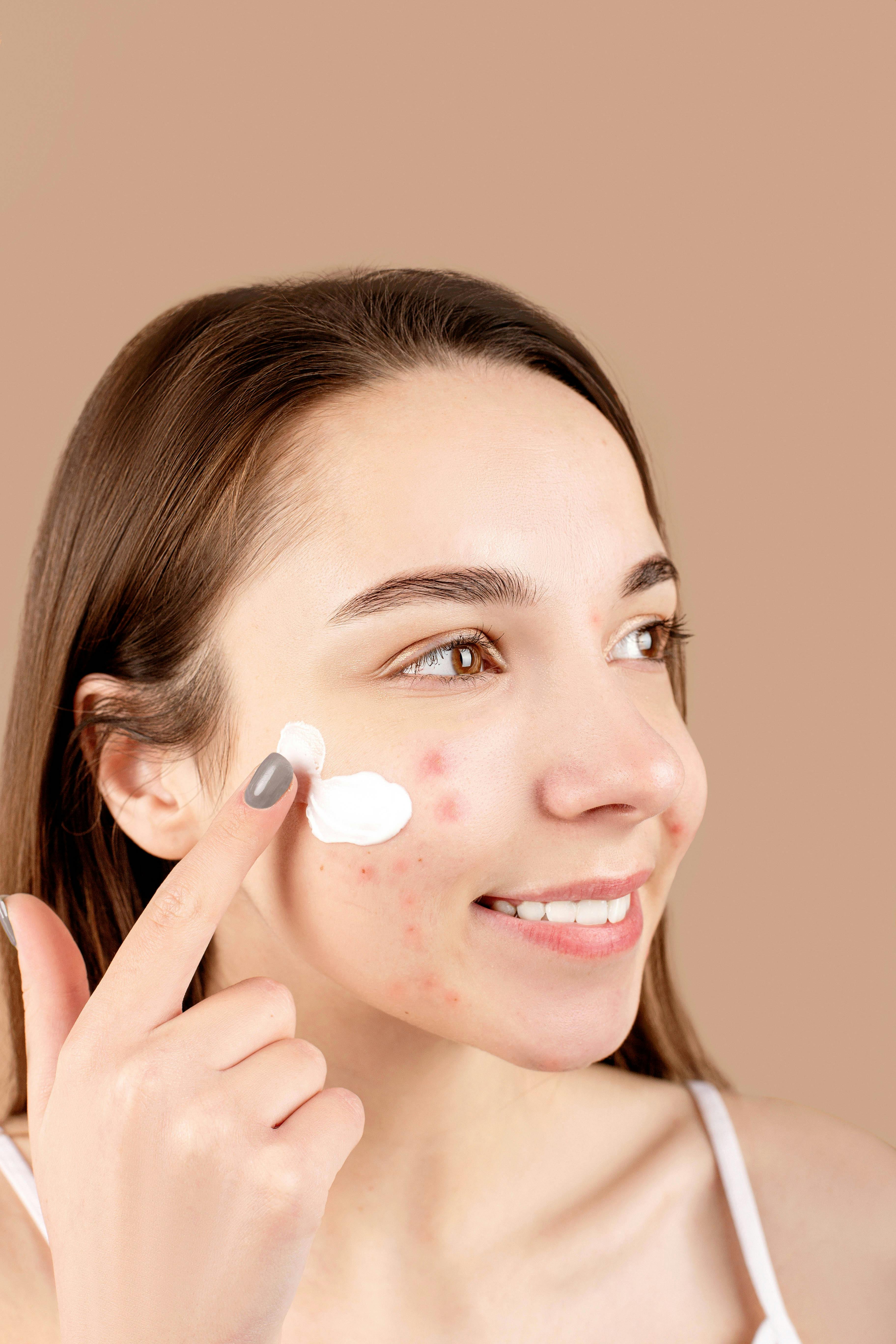
Tranexamic Acid: This compound has been clinically researched to lighten dark spots and balance skin tone across a variety of skin types. In recent years, it has been heavily utilized in the treatment of melasma and UV-induced hyperpigmentation.
Niacinamide: Also known as Vitamin B3, this ingredient helps reduce hyperpigmentation and brighten tired skin by inhibiting the transfer of pigment-carrying melanosomes. In clinical trials, niacinamide has been shown to stabilize the skin barrier function.
Retinol: Retinol increases the rate of cellular turnover, meaning that existing dark skin cells are shed to make way for new healthy cells. It also curbs the production of melanin.
Light and Laser devices: Depending on the severity of the hyperpigmentation, devices using Intense Pulsed Light or Q-switched lasers can help remove unwanted pigment. It is always best to consult with a dermatologist to determine the safest form of treatment.
Frequently Asked Questions
Are Liver Spots Caused By Liver Disease?
No, the term "liver spots" is a misnomer. These dark spots are officially known as solar lentigines and are entirely caused by long-term ultraviolet exposure from the sun. They have no medical connection to liver function or liver disease.
Do Freckles Fade In The Winter?
Yes, freckles generally fade or become significantly lighter during the winter months when UV index levels are lower. However, unlike freckles, deeper sun-related pigmentation like age spots will remain visible year-round without targeted treatment.
Can Sensitive Skin Handle Hyperpigmentation Treatments?
Many traditional hyperpigmentation treatments utilize highly acidic exfoliants that can trigger redness and stinging in sensitive skin. Formulations utilizing stabilized derivatives like Aminopropyl Ascorbyl Phosphate alongside calming agents like Hinokitiol allow reactive skin to tolerate these powerful actives safely.
References
- American Academy of Dermatology. (2024). Sunscreen and Sun Protection Guidelines. aad.org.
- Journal of the American Academy of Dermatology. (2025). Mechanisms of UV-induced hyperpigmentation and photoaging.
- Dermatologic Surgery. (2024). Efficacy of topical tranexamic acid and niacinamide in melasma treatment.
About Dr. Jason Rivers, MD
Dr. Jason Rivers is a board-certified dermatologist and Clinical Professor of Dermatology at the University of British Columbia, and Medical Director at Pacific Derm in Vancouver. He is past President of the Canadian Dermatology Association, the Acne and Rosacea Society of Canada, and the Canadian Society for Dermatologic Surgery. Dr. Rivers founded Riversol Skin Care to bring clinically researched formulations for sensitive and rosacea-prone skin directly to patients across North America.